
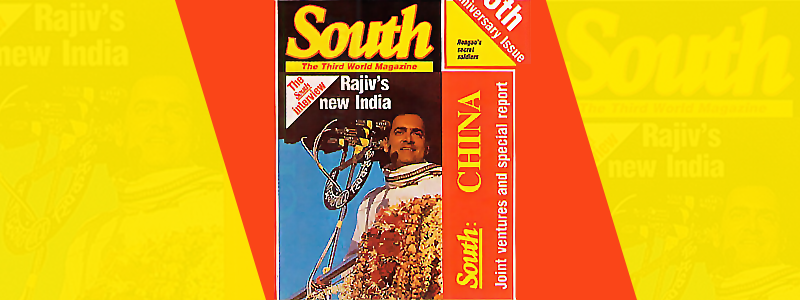
A pioneering magazine for the Third World
South was a monthly magazine launched in 1980 published by South Publications Limited for the Third World Foundation, in London, United Kingdom to highlight development issues and North-South dynamics in international relations and politics in the 1980s.
The Foundation, a registered charity in England and Wales, United Kingdom, was funded by Bank of Credit and Commerce International (BCCI) with Mr Agha Hasan Abedi, BCC President as Chairman of the Board of Trustees.
 Mr Altaf Gauhar, former chief editor of Pakistan’s Dawn newspaper, and Secretary General and Chief Executive of Third World Foundation, was Editor-in-Chief. The office of the South was in the famous New Zealand House in London’s Haymarket where the headquarters of the Third World Foundation was also located.
While thinking of the state of magazine journalism in 1980s, South stands out as one important international magazine of that era. The idea for the monthly grew out of Mr Altaf Gauhar’s work as editor of the Third World Weekly supplement of the Guardian newspaper.
There was always something in the South, on the role of imperialist powers in continued backwardness and economic impoverishment in the third world. Readers who were usually dependant on news and reviews presented by the west, learnt about Patrice Lumumba, the first legally elected prime minister of the Democratic Republic of the Congo, and the US involvement in his downfall. They became acquainted with Latin American and African writers and political and social thinkers such as Carlos Fuentes, Augusto Rosa Bastos, Paul Roberson and C.L. R. James. The first three were novelists and the last two were campaigners for racial equality, black power and civil and human rights. This expanded the readers' small world encased in the narrative presented in the west rigidity and its oppressive hold. Readers were able to form notions of black power, anti-colonialism and the unequal world sustained and maintained between North and South.
Status of South
The magazine was originally published by South Publications Limited (registered in Cayman Islands) and is likely to have ceased publication in the 1990s without the continuing financial support of Bank of Credit and Commerce International (BCCI) extended to the Third World Foundation. The bank was charged with money laundering in 1988 and was controversially shut down in 1991.
South Publications which started publishing the South in 1980, Third World Quarterly, Third World Affairs and the Third World Foundation originally had their offices in the same building known as New Zealand House located at 80 Haymarket, London SW1Y 4TS, England. From early 1989, South was published by South Publications (UK) Limited (later called SOUPB Limited) from a new address at Second Floor, Rex House, 4-12 Regent Street, London SW1 4PE, England.
In the November 1990 issue, a notice on page 2 to all subscribers from the 'new owners' refers to the magazine in liquidation. The message also stated that Creative Limited with its address at First Floor, Rex House, 4-12 Lower Regent Street, London SW1 4PE, England have purchased the business from the liquidators of SOUPB Limited (in liquidation) . Some further issues of South appear to have been published as Emerging Third World Review. Efforts were made to contact the 'new owners' but their telephone number is not in service.
The past issues of South offer an invaluable source of research on that period. It played a catalysing role in debates around colonialism, trade, anti-colonial consciousness and exploitation of South in the name of development, trade and environment by rich northern countries.
North-South Summit, Cancun
In October 1981, the nations of the world met at a North-South Summit conference in Cancun, Mexico to resolve a major problem: how to reconcile the challenge of a growing South within the existing North led world economy. The summit, directly inspired by the Brandt Commission Report of 1980, was attended by representatives of 22 countries from 5 continents and is known to be the only North-South Summit in history.
The aim was to bridge the wealth gap between the few industrial nations and the hundred-odd poor countries. Unfortunately, no firm proposals materialised. The rich nations refused to increase their aid transfers to the developing countries or to correct the growing inequalities in world trade.
Cancun answered only a few bare questions, but the challenge remained. In 1981 the 10 fastest growing economies in the world were in the South and their collective exports totalled US$136.7 billion - with imports of around US$160.5 billion. Third World nations were projected to buy some US$500 billion in goods and services during 1982 - from each other and from the industrialised North.
Perhaps, the idea for the monthly grew out of Altaf Gauhar’s work as editor of the Third World Weekly supplement of the Guardian newspaper. He devoted his journalistic and business skills to helping the world's poor and also founded the Guardian's Third World Review.
Contribution of South
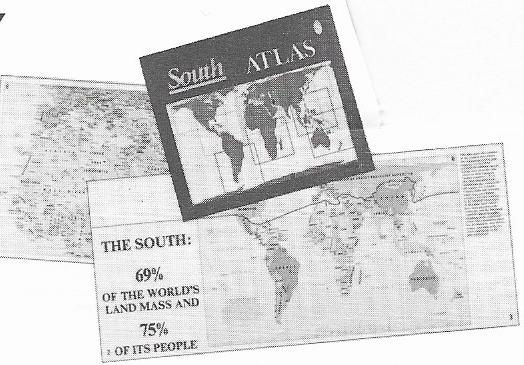 The contribution of South in bolstering writers and political and social thinkers in the Third World was enormous, like Michael Manley ON OCC (a Jamaican politician who served as the fourth Prime Minister of Jamaica from 1972 to 1980 and from 1989 to 1992 and championed a democratic socialist program), Carlos Fuentes (a Mexican novelist and essayist), Augusto Rosa Bastos (writer who was an outspoken advocate of civil and political rights), Paul Roberson (an American who became famous both for his cultural accomplishments and for his political activism) and C.L.R. James (a Trinidadian historian, journalist and socialist). Roberson and James were campaigners for racial equality, black power and civil and human rights. It helped to form notions of black power, anti-colonialism and the unequal world sustained and maintained between North and South.
South Commission
The spin-off of the Third World Foundation publication, South, was the South Commission which, under Dr Mahathir of Malaysia, developed coherent positions of South on development, debt and trade issues. South was in the forefront of the formation of the South Commission which drew membership from statesmen such as Julius Nyerere, president of Tanzania, and Dr Mahathir Mohammad, prime minister of Malaysia. Both were fervent advocates of southern hemisphere or the developing world.
The South Commission was made up of individuals from all the continents of the developing countries, referred to as the South, acting in their personal capacity. It had its origins in a recognition within the South that developing countries have many problems and much experience in common, but that no one in the South was responsible for looking at these things in a comprehensive manner, or at the lessons about the appropriate development strategies which could be drawn from them. Political leaders were naturally preoccupied with the particular problems on their own countries and urgent needs of their own citizens; individual intellectuals dealt with aspects of an all-encompassing problem and again usually concentrated on their own country or region. Further, the South did not know the South - what its potential is, and the manner in which South-South co-operation can widen development options for all the countries. Instead each country is forced to make its own mistakes, without being able to learn from the experience of others in a similar situation, and to benefit from the experience of their successes.
In the light of these facts the South Commission was set up in 1987, under the Chairmanship of Julius Nyrere (Tanzania, President), with Dr Manmohan Singh (India, former Prime Minister) as Secretary General. Among the other Commissioners were S.S. Ramphal (Guyana), Enrique Iglesias (Uruguay) and Abdus Salam (Pakistan) who were already members of the Advisory Commitee of the Third World Foundation. Dr Dragoslav Avramovic, another member of the Advisory Committee was a participant in two working groups of the South Commission dealing with debt issues and South-South Co-operation. The Report of the South Commission was the result of the work on the individual Commissioners. The Third World Foundation also made a financial contribution of US$60,000.
The South Commission pushed South’s perspective on contagious issues of debt, trade and development which are at the heart of the current unjust international order based on exploitation of the South. Largely shaped by the South Commission experience, Dr Mahathir became a vocal spokesman for countries of the South on the world stage.
George Aligiah
The South also kickstarted the career of the illustrious George Aligiah OBE, a star anchor of the BBC. From 3 December 2007, he was the presenter of the BBC News at Six and was previously the main presenter of GMT on BBC World News since its launch on 1 February 2010.
Third World Quarterly
Another long term and direct offshoot of the South was the Third World Quarterly Journal which continued the trend augured by South by addressing issues of debt, trade and development and disparities between North and South and their economic roots.
Helping International Dialogue

In December 1985 South magazine, in association with the Vienna Institute for Development, sponsored an international conference entitled "Decolonisation and After - the Future of the Third World". Many eminent delegates discussed the experiences of African, Asian, Caribbean and Latin American countries. The conference, held in Vienna Austria, also provided a forum for analysing some of the visionary ideas that were put forward for securing and strengthening the self determination of these states.
Acknowledgement:
In-house Magazine
Third World Quarterly publication of Third World Foundation
British Library
Searches Online