

This website is maintained by former BCCI employees as an information resource for students, researchers, former employees, families, historians and others seeking to understand BCCI’s history, operations, global role, the vision of its Founder, and the controversial circumstances surrounding its closure.
This website seeks to present, for the first time, a substantial body of material relating to the history, operations and closure of BCCI, including documents, reports and records that have previously been overlooked, unavailable or insufficiently examined.
Purpose of the Website
The purpose of the website is to enable readers to reassess widely circulated claims that BCCI was “the largest bank fraud in world financial history” or that it was characterised by a “criminal culture from top to bottom.” Such claims have been repeated for decades, often without detailed scrutiny of the wider historical record, much of which was not available, and have played a major role in shaping public perception of BCCI and its legacy.
The material presented on this website will enable readers to assess whether those conclusions were justified, or whether they reflected, in most cases, a one-sided narrative shaped by regulatory decisions, political pressures and media portrayal at the time.
Scope and Content
The website brings together information, documents, commentary and historical material relating to BCCI’s formation, development, international operations, achievements, restructuring efforts, regulatory challenges and controversial closure.
It also highlights the contribution of BCCI’s Founder, Agha Hasan Abedi, and the vision behind the creation of a global bank serving developing countries and international communities.
By presenting this material in one place, the website aims to support further research, encourage informed discussion, and promote a fuller understanding of BCCI’s history, its contribution to international banking, and the unresolved questions surrounding its closure.
BCCI in Brief
The Bank of Credit and Commerce International (BCCI), established in 1972 with capital provided by the Bank of America and Members of the Abu Dhabi Royal Family as major shareholders, became one of the most geographically widespread banks in the world within two decades. At its peak, BCCI had a presence in 73 countries with 14,000 employees serving over one million customers across developing and developed markets through a distinctive relationship-based approach to banking.
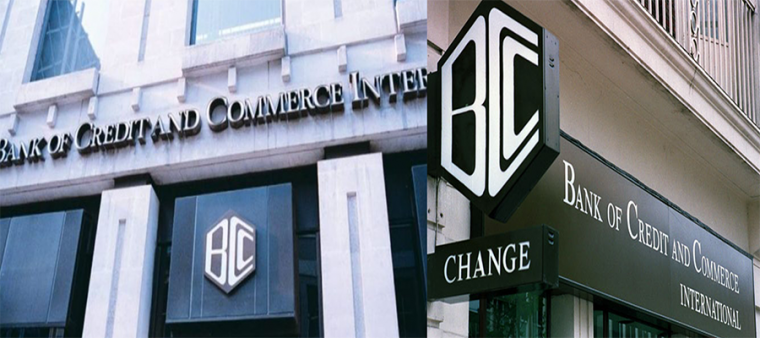
BCCI was a unique phenomenon in international banking. Established by bankers from the developing world, it grew into a global institution offering innovative services and a distinctive relationship-based approach to banking. This approach, shaped by personal trust, cultural understanding and long-term customer relationships, was often misunderstood, misinterpreted and judged through the lens of conventional Western banking practices.
The closure of BCCI in 1991 by Western regulators led by the Bank of England remains controversial, particularly in view of BCCI’s global reach, its importance to customers and employees in many developing countries, and the unresolved questions surrounding the regulatory decisions that brought BCCI to an end.
There is a view that BCCI was not insolvent at the time of its closure, particularly in light of the continuing financial support of its Abu Dhabi majority shareholders and the restructuring plan then underway. Abu Dhabi had provided, or committed to provide, substantial financial backing through capital injections, guarantees and promissory notes intended to strengthen the Bank’s capital position and support its reorganisation.
It has also been argued that BCCI maintained significant liquidity when compared with many international banks that relied heavily on interbank borrowing to meet short-term obligations. On this view, BCCI’s closure was not simply a case of immediate financial collapse, but a regulatory decision taken despite shareholder support, available liquidity, and proposals to restructure the Group’s operations.
The closure of BCCI effectively ended the possibility of another multinational bank emerging from the Third World on such a scale. BCCI was established by its Founder with a wider vision: to create a global banking institution dedicated to serving all nations and communities, in particular the Third World, and humanity as a whole.
Why is additional context important?
The material presented on this website raises important questions about whether those conclusions were fully justified, or whether they reflected a one-sided narrative shaped by regulatory decisions, political pressures and media portrayal at the time. By bringing together relevant documents, commentary and historical evidence, the website aims to support a fuller and more balanced examination of BCCI’s role, achievements, challenges and controversial closure.
Providing additional context helps ensure that conclusions about BCCI are not based solely on one set of narratives or repeated allegations. A fuller examination of the available material allows for a more balanced, informed and independent understanding of the Bank’s history, operations and controversial closure.
Readers are encouraged to review the information presented, consider different perspectives, and form their own conclusions based on the wider evidence rather than relying only on established narratives.
Closure and Controversy
The website provides the opportunity to examine the circumstances surrounding BCCI’s closure in July 1991, including questions relating to fairness, regulatory approach, and the wider context at the time.
At the time of closure, BCCI was engaged in a restructuring process supported by its majority shareholders in Abu Dhabi, with financial backing intended to safeguard depositors and employees. However, regulators, led by the Bank of England, proceeded to close the bank before allowing these measures to be implemented.
Lord Justice Bingham’s report indicates that the decision-making process leading to BCCI’s closure began before the public announcement on 5 July 1991. By 1 July 1991, the Bank of England had already moved towards collective supervisory action that would lead to closure, despite Abu Dhabi transferring US$650 million to BCCI on 4 July 1991 as part of the support package intended to strengthen the Bank’s capital position. The exclusion of the Abu Dhabi Central Bank from key stages of this process, despite its membership of the College of Regulators and Abu Dhabi’s role as majority shareholder and financial supporter, raises serious questions about morality and transparency.
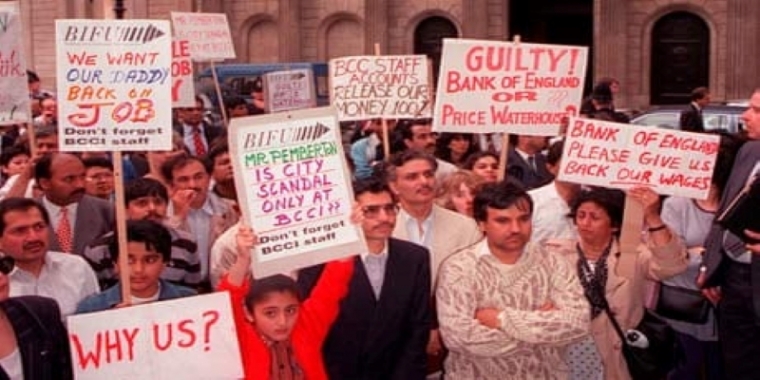
The closure of BCCI had wide-ranging consequences, affecting employees, customers, and financial markets across multiple jurisdictions. It also gave rise to extensive commentary, official reports, and media coverage, which have shaped public understanding of the bank and its operations.
In the period immediately following its closure, certain narratives about the bank were widely publicised, often shaped by misinformation that influenced how its founding, banking services, and expansion across developing countries, commonly referred to as the Third World, have been understood. These narratives have remained embedded over time, in part due to the absence of a widely available alternative perspective.
Rather than advancing a single interpretation, the website enables readers to review the available information and form their own conclusions about the events leading to the closure and their implications.
BCCI as a Case Study
BCCI is frequently presented in academic literature, business schools, and professional discussions as a case study of “the largest bank fraud in world financial history.” This portrayal broadly reflects the narrative that developed following its closure in 1991.
However, such case studies do not always provide comparative context with other major financial misconduct cases involving large international banks, some of which involved substantial sums and extended over long periods. In many of these instances, the institutions concerned were not closed but continued to operate following regulatory action.
Examples often cited in public reports include:
- Wachovia - now part of Wells Fargo, Wachovia was one of the biggest banks in the USA. In 2010, the bank was found to have allowed drug cartels in Mexico to launder close to US$390 billion through its branches during 2004 - 2007.
- Danske Bank - Denmark's largest bank came into the limelight after the European Commission described its US$228 billion money-laundering case as the biggest scandal in Europe. Thousands of suspicious customers of the bank's Estonian branch allegedly carried out illicit transactions worth about US$228 billion during 2007-2015.
- HSBC - regulatory breaches relating to anti-money laundering and sanctions controls complaints against the British multinational bank included provision of banking services and UD dollars to some banks in Saudi Arabia with apparent connections to terrorists, circumventing international sanctions and allowing transactions involving blacklisted countries such as Iran and North Korea and improper controls at HSBC Mexico despite its apparent problems with drug trafficking and money laundering.
- Capital One - Capital One, an USA bank holding company, was hit with a $290 million penalty after admitting to the U.S. Treasury Department that it wilfully violated anti-money laundering requirements between 2008 and 2014. [The bank's] failures allowed known criminals to use and abuse USA's financial system unchecked.
In 2020, leaked documents revealed the scale of suspicious financial activity moving through the global banking system. Over 2,100 Suspicious Activity Reports (SARs), covering transactions exceeding US$2 trillion, were obtained by journalists and shared with the International Consortium of Investigative Journalists (ICIJ).
The investigation identified several major global banks, including JPMorgan Chase, HSBC, Standard Chartered, Deutsche Bank, and Bank of New York Mellon.
These reports related to transactions between 1999 and 2017 and originated from the Financial Crimes Enforcement Network (FinCEN), a bureau of the U.S. Treasury responsible for monitoring and combating money laundering.
The comparisons, discussed further under Perspective on this website, are not intended to draw direct equivalence, but to place BCCI within a wider context of international banking practices and regulatory responses, and to consider differences in how large Western banks have been treated.
Work on the Website Project
Work on the BCCI Insights website project is ongoing.
The project seeks to preserve this material in one accessible place and make it available for students, researchers, former employees, families and others interested in understanding BCCI’s history, operations, global role, the vision of its Founder and the unresolved questions surrounding its closure.
The website provides the opportunity to examine the circumstances surrounding BCCI’s closure in July 1991, including questions relating to fairness, regulatory approach, and the wider context at the time.
The website does not claim to present a complete record of BCCI. Given the passage of time, the scale of BCCI’s operations, and the complex nature of the events leading to its closure, assembling a fully comprehensive account would be difficult.
Instead, the project seeks to make available as much relevant material as is reasonably possible, including documents, reports, records, commentary and personal recollections. Additional information continues to be gathered from former employees, creditors, families and other sources, although some gaps are likely to remain.
The intention is not to provide the final word on BCCI, but to preserve important material, encourage further research, and enable readers to examine the available evidence and form their own informed conclusions.
Research and Analysis
The website also attempts to provide perspective and analysis on key allegations contained in reports and publications issued after BCCI’s closure. These include The BCCI Affair, the 1992 report prepared for the United States Senate Committee on Foreign Relations, as well as those sensationalised in various books, articles and media accounts that have shaped the public narrative surrounding BCCI.
By examining these sources alongside documents, records and recollections from other perspectives, the website seeks to encourage a more critical and balanced assessment of the claims made about BCCI and the circumstances surrounding its closure.
Contribute to the Website Project
Contributions from former BCCI employees are particularly welcome. These may include internal documents, reports, memos, circulars, manuals, letters, minutes of meetings, personal recollections, essays, photographs, publications, and audio or video material.
Such contributions will help preserve important historical material, broaden the range of perspectives available, and support a fuller understanding of BCCI’s history, operations, Founder’s vision and the unresolved questions surrounding its closure.