
The forum for free reasoned discussion and debate.
Third World Quarterly, a leading journal in the 1980s, was the direct offshoot of the South magazine published by the Third World Foundation, London, and funded by the Bank of Credit and Commerce International.

Third World Quarterly, which began publication in 1979, was received by over 7,500 policymakers, diplomats, international organisations, academics, university libraries, research institutions and individual subscribers.
Extract from Editor's Note in the first issue of Third World Quarterly 1979
"The journal is coming out at a crucial time, for 1979 could well determine the outcome of the North-South debate. Will the crumbs of 'economic concessions' gratify the Third World into abandoning the pursuit of a New International Economic Order? Will the advocates of the present system yield to the necessity of its fundamental restructuring, and not lured by the promise of a bigger market for their goods and services, or under the dictates of interdependence, but in frank recognition of the justice of the demands of the Third World? These and other cognate questions will begin to find an answer in 1979. If the answers are in the negative, as appears likely, the last two decades of this century may witness the gradual crumbling of the present system and its elaborate negotiating machinery, accompanied by a collapse of national governments in the Third World. With that will disappear the present elitist groups wedded to the status quo in the developing countries. They will have exhausted all possibilities of shifting alliances at home. The masses will have rejected the system with all its apologies.
Despite all the expensive PR ploys used by the World Bank, its World Development Report shows that aid policies and development strategies evolved in the West have failed. The number of 'absolute poor' has risen from 500 million 25 years ago to $800 million, which means 800 million hungry, naked and uneducated men, women and children today. Has the World Bank any new ideas to offer? The 'basic needs' concept which the Bank is now promoting is inspired by a vision of 800 million human animals inhabiting a global zoo in a basically fed, clothed and sheltered state. When the 'trickle-down' theory exploded, the President of the World Bank said that he could not explain why the benefits of development had not trickled down to the masses. He is not likely to offer a better explanation when the global zoo breaks down, releasing forces which will be irresistible and uncontrollable. The Finance Ministers of the Commonwealth countries meeting in Montreal in September 1979 were not particularly elated by the findings of the World Bank and emphasised that the projection made in the Report on the basis of present trends indicated a wholly unacceptable option for the world community'.
It is in this uncompromising environment that we come to strive for understanding , accommodation and solutions. Our concern in the Third World: we will speak for it, indeed speak with its voice. We will focus attention on special problems and suggest specific solutions with interdisciplinary scope and not concern ourselves with abstract and theoretical issues.
We shall publish contributions from specialists in any field that is relevant to Third World concerns: political science and sociology, applied science and technology, medicine and social work, education, social aspects of geography, problems in which fields such as seabed mining and mineral exploration, and public and international law.
The unifying element will be an open-minded and sympathetic search for establishing an international order based on justice.
We offer the Third World Quarterly as a forum for informed and reasoned debate, and we hope that the views contained in this journal will reach those people who influence policy making in governments, international organisations, academic communities. trade unions and the mass media."
The editor was Altaf Gauhar, Secretary-General and Chief Executive of the Third World Foundation with Shahid Qadir, Honorary Research Associate at Royal Holloway, University of London UK, as Associate Editor.
Third World Quarterly continued the trend South predicted by addressing issues of debt, trade and development and disparities between North and South and their economic roots. The journal debated Third World issues and difficulties that were not given sufficient attention and importance in the West.
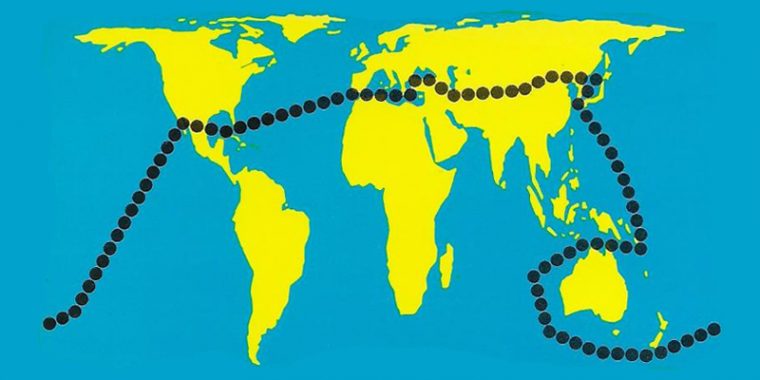
The journal carried several regular features: North-South Dialogue, with aims to provide eminent statesmen and scholars involved in North-South issues with an opportunity to express their views; North South Monitor recorded and analysed the state of North-South negotiations; and Forum for a regular exchange of ideas on Third World issues. Each Quarterly issue also contained an extensive book review section, book notes and a list of recent publications about the Third World.
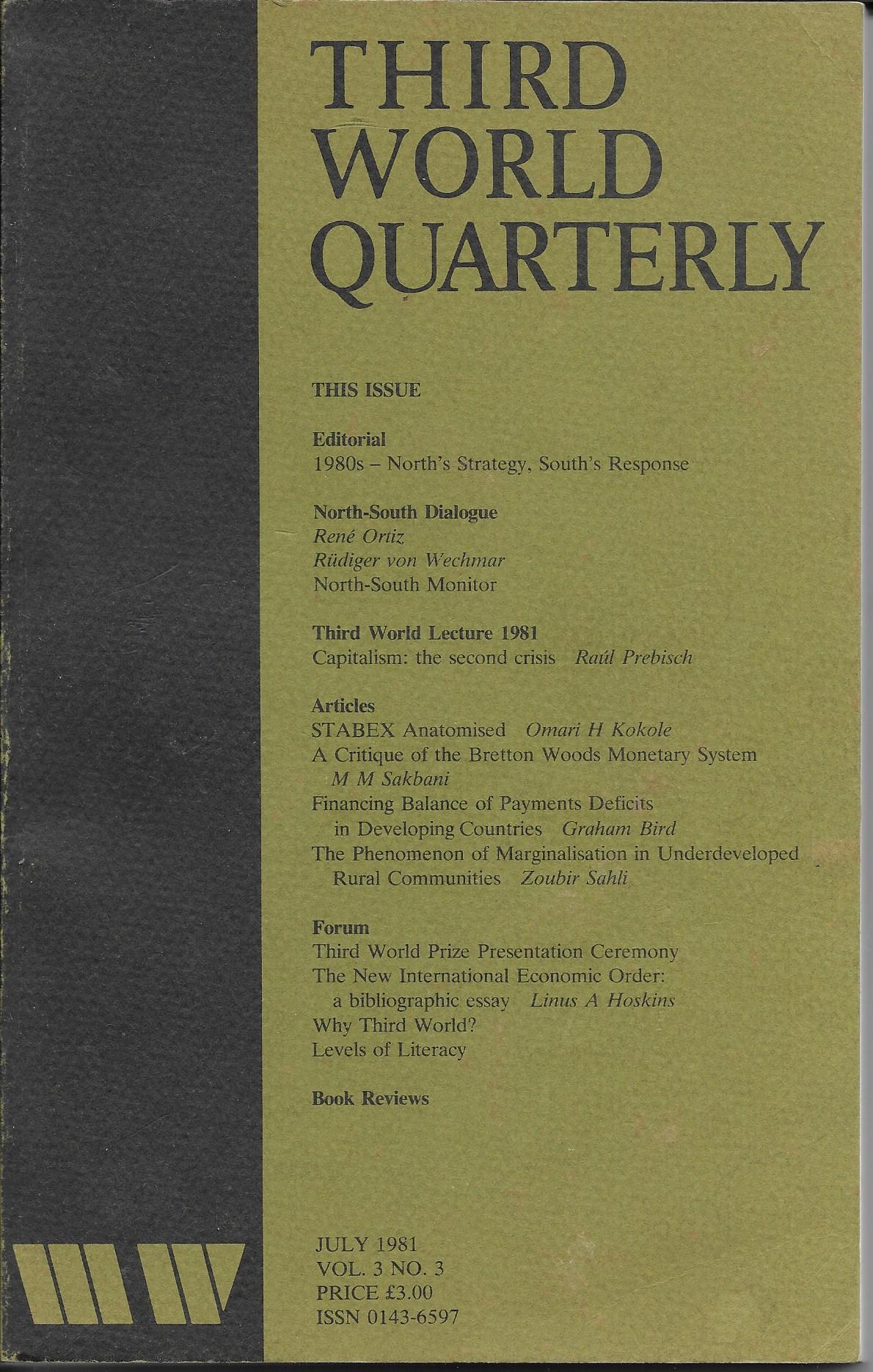 Third World Quarterly published by the Third World Foundation and funded by Bank of Credit and Commerce International (BCCI) remains an important legacy of Mr Agha Hasan Abdei, BCCI's Founder and President, to raise the concerns of the developing countries where the poor pay dearly for the self-centered environmental probity and welfare of the rich.
 Third World Quarterly is now a publication of Centre for Developing Areas of Research at the University of London, Department of Geography, Royal Holloway, Egham, Surrey, United Kingdom. At the time the journal was complemented by an annual publication, Third World Affairs, and subsequently complemented by a sister publication, Third World Thematics, an online journal devoted to the publication of special issues that focuses on the political economy, development and cultures of those parts of the world that have experienced the most political, social and economic upheaval, and which have faced the greatest challenges of the postcolonial world under globalisations: poverty, displacement and diaspora, environmental degradation, human and civil rights abuses, war, hunger and disease.
Third World Quarterly continues to examine all the issues that affect the many countries of Third Worlds and it has not been averse to publishing provocative and exploratory articles identifying significant political, economic and social issues, especially if they have the merit of opening up emerging areas of research that have not been given sufficient attention.
According to the Journal Citation Reports, the journal had an impact factor of 2.156 in 2018, ranking it 11th out of 41 journals in the category "Development Studies." Third World Quarterly was previously complemented by an annual publication, Third World Affairs, was subsequently complemented by its sister publication, Third World Thematics.
Acknowledgement:
Third World Quarterly publication of Third World Foundation