
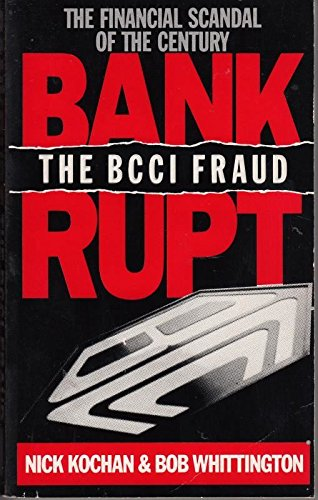
Ask people about the Bank of Credit and Commerce International (BCCI) and most will never have heard or read about it. Those who have will usually say it "collapsed" amid allegations of widespread fraud. "Collapsed" suggests a bank that ran out of money, in other words "bankrupt" and could no longer pay its depositors or meet its obligations in the market.
The public record tells a different story. The question has rarely been examined closely, perhaps because the shock of the abrupt closure by the Bank of England, and the lack of information that followed, left former employees and depositors unable to do so.
5 July 1991: a decision to close, not a failure to pay
BCCI did not stop paying its depositors, and it did not default on its obligations. At about 1.00 pm London time on Friday 5 July 1991, the Bank of England led a sudden move to take control of BCCI's offices and assets, in coordination with some European central banks. Abu Dhabi, BCCI's majority shareholder, and the UAE Central Bank were not consulted about this move.
The Chancellor, Norman Lamont, told the UK Parliament that the Bank of England had decided BCCI "should be closed down" after receiving a Price Waterhouse report (Hansard, 19 July 1991). The reason given was a regulatory judgment by the Bank of England. No one, nor the UK Chancellor, said BCCI had run out of money. The report on which the Bank of England relied was still only a draft. Christopher Cowan, the Price Waterhouse partner, considered that there was “not very much new in it” and suggested that its impact resulted from bringing the various threads together in one place. (Bingham Report, para. 2.445, p. 140).
A US Senate report later recorded that the Bank of England had "tentatively agreed" with BCCI and its Abu Dhabi owners to restructure the bank, and that this was "reversed abruptly" in late June 1991 (The BCCI Affair, ch. 12). The Bingham Report into the Bank of England's supervision of BCCI, published in October 1992, records communications during the restructuring discussions in which US authorities objected to the restructuring and indicated they would act against BCCI if the Bank of England did not.
An owner putting money in, not taking it out
When it was closed, BCCI had a wealthy majority shareholder that was still committing funds.
- In April 1990 the Government and Ruling Family of Abu Dhabi took about three-quarters of the bank, "with the full support of the Bank of England" (The BCCI Affair, ch. 14).
- Abu Dhabi guaranteed BCCI's losses, which allowed its auditors to sign the 1989 accounts (ch. 12).
- By mid-1991 it had committed about $4 billion to a restructuring. Its representatives "had not been expecting the action" and "had been working closely with regulators" (ch. 14).
- The day before the closure, Abu Dhabi sent more than $600 million to the bank (Hansard, 20 November 2008).
A bank in that position does not collapse suddenly. It can only be stopped.
No bank can pay everyone at once
Every bank borrows short and lends long. It takes deposits that can be withdrawn today and lends them out for years. If every depositor asked for their money back on the same day, no bank in the world could pay them all immediately, however sound its loans.
This is not a weakness peculiar to troubled banks. It is how all banking works. Banks cover day-to-day shortfalls by borrowing from each other in the interbank market. When that market dries up, the central bank steps in as lender of last resort, lending against the bank's loans and securities. Being unable to pay everyone at once is not the same as being bankrupt. A bank is bankrupt only if what it owns is worth less than what it owes and it has no financial banking. This was not so in the case of BCCI.
The published accounts of the world's largest banks show this clearly. The table compares each bank's cash, including its balances at central banks and deposits placed with other banks, with the deposits it owes its customers, at 31 December 2024.
Even today, after rules introduced since the 2008 crisis require banks to hold far more liquid assets than before, these banks could repay only about 15 to 37 per cent of their deposits from cash. For the rest they would rely on selling or pledging securities and, in a crisis, on the interbank market and the central bank. In 1990 banks held a much smaller share of their deposits in cash than they do now. On the "cash in hand" test, any of them could have been called bankrupt on any day of the year.
So the real question is rarely whether a bank could survive on its own. It is whether someone is allowed to stand behind it. BCCI had someone willing to do that.
Critics point to later reports that found fraud and large losses in BCCI's books, and argue that the bank owed more than it owned. That view is disputed. Even if it were right, it would not mean the bank collapsed. It would mean it needed its owner's money, and that money had been committed by its majority Abu Dhabi shareholders.
Initially
In the years before and during 1991, banks with serious holes in their books were rescued or given time to recover.
- America's largest banks, from 1982. Their loans to Latin America were worth 176 per cent of their capital. Regulators let them delay recognising the losses because, as the Federal Reserve's own history puts it, full recognition would have meant the banks were judged bankrupt (Federal Reserve History).
- Continental Illinois, 1984. After losing about 30 per cent of its funding in ten days, it was saved by the US authorities, who guaranteed all its creditors. It gave the world the phrase "too big to fail" (Federal Reserve History).
- Johnson Matthey Bankers, London, 1984. Facing losses of about £248 million, it was taken over by the Bank of England, which put in £100 million of capital (Hansard, 20 June 1985).
- Citicorp, 1991. Just four months before BCCI was closed, America's largest bank was short of capital after heavy losses on property and developing-country loans, and the Federal Reserve was pressing it to strengthen its capital. In February 1991 a Saudi investor, Prince Alwaleed bin Talal, put in $590 million. Citicorp was given time, recovered, and later became Citigroup.
Citicorp was rescued by a single Gulf investor committing $590 million. BCCI was closed while its Gulf owner was committing about $4 billion. BCCI needed no public money. Its owner was ready to pay and wealthy enough to do so.
What creditors got back
By November 2008, UK creditors of BCCI had received about 84 per cent of their claims, with a further 2.5 per cent on the way. The government said the money recovered included "a sizeable payment from the bank's majority shareholders" (Hansard, 20 November 2008). A sizeable recovery was also from BCCI;s own cash and funds with other banks. That was after liquidation costs worldwide that one UK MP put at more than $1.2 billion.
Questions that are still important
If Abu Dhabi's money and BCCI's own assets could repay most creditors after the closure, why did the Bank of England not allow the restructuring to be implemented, rather than abruptly closing the bank?
Why was a restructuring agreed in principle, then dropped within days?
Why did the Bank of England act so quickly on a draft, rather than first asking Price Waterhouse to finalise its Section 41 report, when Cowan, the Price Waterhouse partner, considered there was not very much new in it?
Why were Citicorp and other banks with large losses given time, and BCCI not?
This page does not claim to answer these questions. We set out the record so that readers can judge for themselves and, if they wish, look further.
Sources
Hansard, House of Commons UK, 19 July 1991: Bank of Credit and Commerce International
Hansard, House of Commons UK, 20 November 2008: Bank of Credit and Commerce International
Hansard, House of Lords UK, 20 June 1985: Johnson Matthey Bankers
The BCCI Affair, US Senate Committee on Foreign Relations, 1992, ch. 12 (The Regulators) and ch. 14 (Abu Dhabi)
Inquiry into the Supervision of the Bank of Credit and Commerce International (Bingham Report), 1992
Federal Reserve History: Latin American Debt Crisis of the 1980s; Continental Illinois
Annual reports and Form 10-K/20-F filings for 2024: JPMorgan Chase & Co., Bank of America Corporation, Citigroup Inc., HSBC Holdings plc, Barclays PLC