
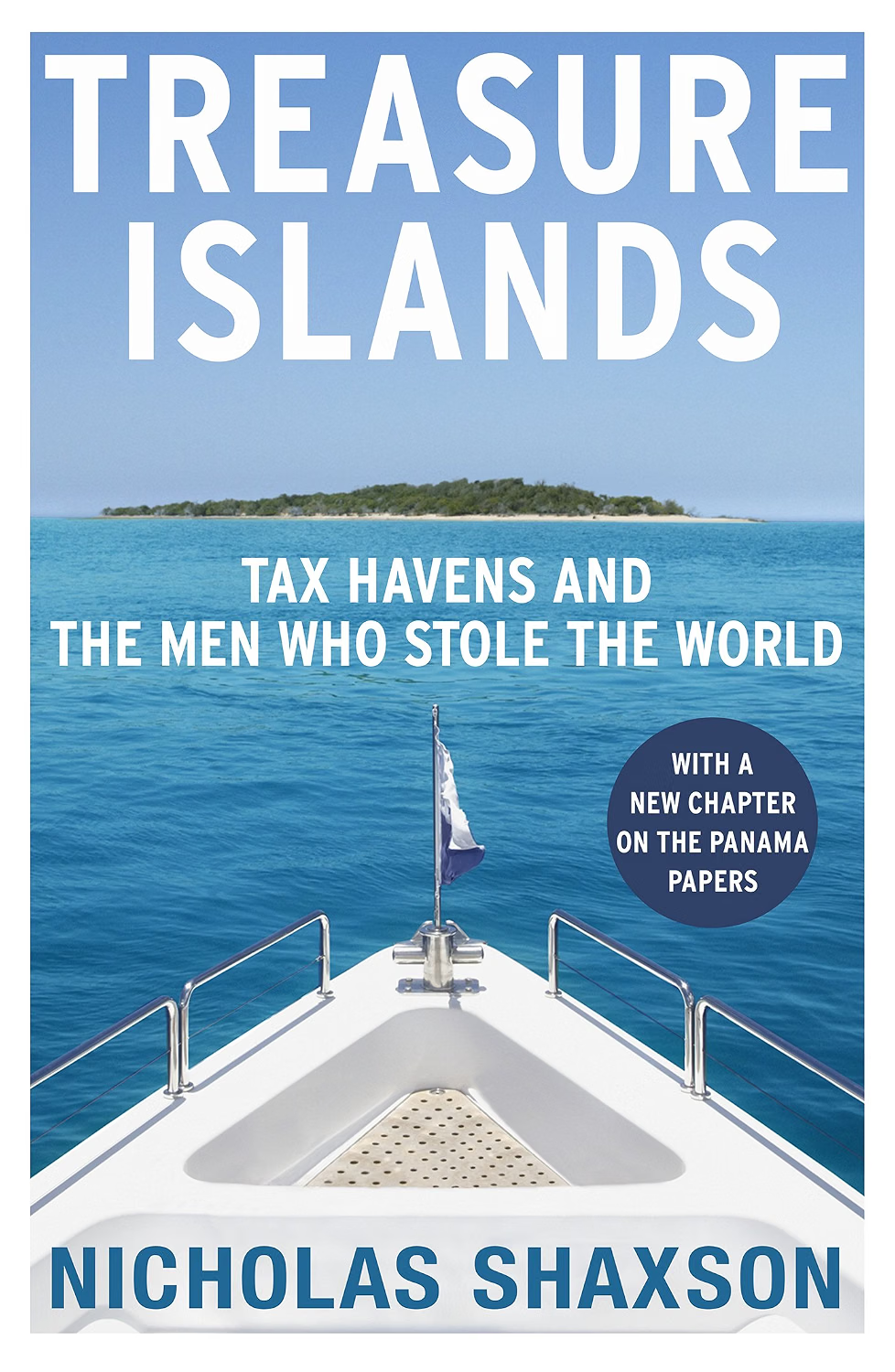
TREASURE I$LANDS: Tax Havens and the Men Who Stole the World
First published in 2011 and issued with updated material in 2012, Nicholas Shaxson’s Treasure I$lands examines how offshore finance became deeply embedded in the modern international financial system.
Shaxson argues that tax havens are not limited to small, remote islands. He places the City of London at the centre of a wider British offshore network that includes the Cayman Islands and British Virgin Islands, which are British Overseas Territories, and Jersey, Guernsey and the Isle of Man, which are Crown Dependencies. He also describes the United States, particularly states offering financial secrecy and lightly regulated corporate structures, as displaying many characteristics of a major tax haven.
The book traces the development of this system through the growth of the Eurodollar market, the continuing financial connections of the former British Empire and the influence of the City of London. Reviewing the book in The Guardian, Peter Preston described London as the centre of a worldwide financial network, with the Bank of England portrayed as playing a central supporting role in its development.
Shaxson supports his argument with examples involving established companies, wealthy individuals and major banks. The updated edition cites Lloyds TSB, which paid US authorities $350 million in 2009 after admitting that it had concealed information in transactions involving Iranian and Sudanese clients passing through the US banking system. It also refers to the low effective taxes paid by major multinational companies and wealthy individuals, including Warren Buffett’s observation that he paid a lower tax rate than members of his office staff.
The book is particularly useful in showing that offshore centres such as the Cayman Islands were routinely used by major Western banks, investment funds, multinational companies and wealthy international clients. Their use was therefore neither unusual nor peculiar to BCCI. Offshore centres offered tax, regulatory, secrecy and structural advantages that had become part of mainstream international finance.
This provides important context when considering criticism of BCCI for maintaining operations in the Cayman Islands. The existence of an offshore company or banking operation should not, by itself, be treated as evidence of criminal purpose. Its activities, ownership and transactions must be examined on the evidence.
Shaxson nevertheless presents BCCI mainly through the themes of offshore secrecy, corruption and criminal activity. He gives comparatively little attention to the much larger conventional banking business that BCCI conducted across more than 70 countries, serving ordinary customers and businesses.
The book therefore offers a useful comparison: BCCI’s Cayman Islands presence should be considered within a much broader international offshore system developed and extensively used by major Western banks, multinational companies and financial institutions.
Criminal Capital: How the Finance Industry Facilitates Crime
Criminal Capital, written by Stephen Platt and published in 2015, examines how legitimate banks, financial products and corporate structures can be misused to facilitate criminal activity. Platt is an English barrister and specialist in financial-crime prevention and regulatory investigations.
The book covers money laundering, corruption, drug trafficking, terrorist financing, sanctions evasion, tax offences, fraud, piracy, human trafficking and arms trading. It explains how companies, trusts, foundations, investment funds, private banks, insurance products and offshore structures can be used to move, disguise or conceal illicit funds.
Platt supports his analysis with real cases involving major institutions, including HSBC, Wachovia, BNP Paribas and Credit Suisse. The book therefore does not present financial crime as a problem confined to offshore jurisdictions, small banks or institutions established for criminal purposes. It shows how criminals can exploit respected banks and otherwise legitimate parts of the international financial system.
The book received strong endorsements. Eric Lewis, a senior partner at Lewis Baach and former counsel to the liquidators of Madoff International Securities, described it as a bold and sobering examination of excessive risk-taking and the willingness of banks to overlook criminal activity by customers. Carole Switzer, co-founder and president of the Open Compliance and Ethics Group, praised its clear account of how financial institutions may tacitly enable crime and its challenge to banks and regulators to take stronger action.
The book provides useful context when considering the allegations against BCCI. It suggests that the use of complex companies, offshore structures or private-banking arrangements should be judged according to the evidence in each case. Their existence alone does not establish that an entire bank, or all those working within it, was inherently criminal.
Offshore Finance Centres and Tax Havens: The Rise of Global Capital
Edited by Mark P. Hampton and Jason P. Abbott, this academic collection was published in 1999 and examines the growth of offshore finance as part of the development of modern global capital markets.
The book is particularly relevant because it includes a chapter specifically titled “International Banking and Offshore Finance: London and the Major Centres.” Other chapters examine Jersey, Guernsey, Malta, Malaysia and Southern Africa, as well as the legal and political structures supporting offshore finance.
Rather than presenting offshore finance as a marginal or purely criminal activity, the book shows how it became closely connected with the growth of international banking, financial deregulation and global capital flows.
This provides important historical context. BCCI’s use of offshore centres should be considered within an international banking system in which London and other major financial centres were themselves deeply connected with offshore finance.
The book therefore helps distinguish between the legitimate use of offshore financial centres and their possible misuse in particular transactions.
The Offshore Interface: Tax Havens in the Global Economy
The Offshore Interface, written by Mark Hampton and published in 1996, examines how tax havens and offshore financial centres developed and became integrated into the global economy. Hampton considers who uses these centres, why particular jurisdictions became successful and how taxation, confidentiality, regulation, technology and international capital movements contributed to their growth.
The book explains how offshore centres form an interface between onshore and offshore finance. They do not operate as an entirely separate financial world: they receive business, capital and professional expertise from major financial centres and then channel funds back into those centres and international markets.
A chapter entitled “Offshore Finance in London, Regulation and Eurocurrencies” examines London’s central role in developing the Eurocurrency market. This market allowed banks to accept deposits and conduct transactions in currencies outside the countries that issued them, particularly US dollars held and traded outside the United States. This helped international banks conduct cross-border business with fewer domestic restrictions and closely connected offshore finance with mainstream banking in London.
Hampton also examines the relationship between onshore states and their offshore territories, the development of Caribbean offshore centres, technological changes and the importance of communications in moving money internationally. His extensive two-part case study of Jersey demonstrates how a small jurisdiction developed into a successful offshore financial centre and how that transformation affected its economy, government and regulatory structure.
The Jersey case study illustrates that this growth was driven substantially by established international banks. Institutions operating there included Citibank, Bank of America, Deutsche Bank, Banque Nationale de Paris, Barclays, HSBC and Bank of India. Other research records that Citibank, Chase Manhattan and Bank of America had entered the Channel Islands during the 1960s. The presence of such institutions demonstrates that offshore finance was not confined to obscure banks or organisations created for unlawful purposes; it had become part of the international strategies of major banking groups.
The book also explains how differences between onshore and offshore rules created commercial opportunities. For example, some Jersey banks were able to channel funds back to their UK parent institutions while avoiding credit restrictions then operating in Britain. This demonstrates how offshore centres could be used not only to reduce taxation or preserve confidentiality but also to conduct financial business outside certain controls applying in the home country.
Hampton does not suggest that all offshore activity was criminal. His analysis distinguishes between legitimate international banking, tax planning and investment on the one hand, and tax evasion, money laundering, corruption or regulatory avoidance on the other. The central issue is how an offshore structure was actually used, not merely where it was incorporated or operated.
This distinction is important when considering criticism of BCCI for maintaining operations in offshore jurisdictions. The relevant questions are:
- What business did the offshore entity conduct?
- Who controlled it?
- What transactions passed through it?
- How was it supervised?
- Were applicable laws and regulations followed?
The book therefore provides valuable background for separating the existence of offshore operations from evidence of criminality. BCCI’s offshore presence should be assessed transaction by transaction and in the wider context of an offshore financial system developed and extensively used by major British, American, European and international banks.
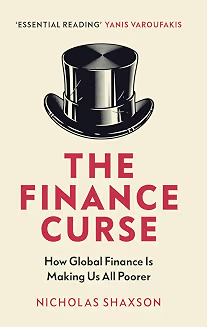
The Finance Curse: How Global Finance Is Making Us All Poorer
The Finance Curse, by Nicholas Shaxson, was first published in 2018 and develops the arguments introduced in his earlier book, Treasure Islands.
Shaxson broadens his examination from tax havens and offshore secrecy to the much larger role of finance in modern economies. He concentrates particularly on the City of London, international banking, wealth management, tax avoidance, money laundering, financial deregulation and the political influence of powerful financial interests.
His central argument is that finance is essential to a healthy economy, but that beyond a certain size it may cease to serve businesses and society effectively. An oversized financial sector can attract skilled people and investment away from other industries, increase inequality, inflate property prices, encourage excessive risk-taking and gain disproportionate influence over governments and regulators. The financial sector may then become more concerned with extracting wealth than supporting productive economic activity.
The book refers to major institutions including Goldman Sachs, HSBC, Barclays, Royal Bank of Scotland, Lloyds, Northern Rock and Lehman Brothers. Goldman Sachs is used in discussing the difference between the interests of a powerful financial institution and those of the wider national economy. Shaxson writes, in substance, that improving Goldman Sachs’s fortunes does not necessarily improve America’s fortunes.
Northern Rock is examined as an example of financialisation and the risks created when a traditional building society was transformed into a bank heavily dependent on wholesale funding and securitised mortgages. Its collapse and nationalisation illustrate how gains may remain private during successful years while the wider public bears the consequences when a large financial institution fails.
The book also refers to HSBC in connection with money laundering and regulatory weakness, while Lehman Brothers appears in its discussion of the 2008 financial crisis. Barclays, HSBC, RBS and Lloyds are relevant to the wider “finance curse” analysis because of their dominance of British banking and the substantial implicit public support enjoyed by institutions considered too important to fail.
Shaxson does not argue that every activity undertaken by these banks was unlawful. His broader concern is with the structure of the financial system: the concentration of economic power, the ability of large institutions to influence public policy and the tendency of governments to protect globally important banks because of the disruption their failure might cause.
The book is relevant because it presents offshore finance, secrecy, financial misconduct and regulatory failure as features of a much broader Western-dominated financial system, not as practices confined to distant islands, smaller banks or unconventional institutions. It provides useful context when considering whether practices portrayed as unusual or suspicious in the case of BCCI were, in various forms, also embedded in the wider international banking and financial system.
The book complements Treasure Islands by showing how offshore structures and wealth-management arrangements connect directly with London and other major financial centres. It also provides a basis for comparing the treatment of BCCI with the regulatory and governmental responses to later failures or misconduct involving large established banks.
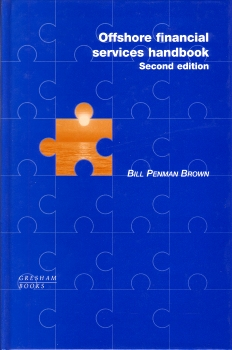
Offshore Financial Services Handbook
Offshore Financial Services Handbook, by Bill Penman Brown, was first published in 1996, with a substantially revised second edition appearing in 1999. It differs from many investigative books about offshore finance because it was written as a practical professional guide to the lawful use, operation and regulation of offshore financial centres.
The handbook covers the selection and characteristics of offshore centres, offshore banking, taxation, regulation and supervision, money laundering, asset protection, trusts, company management, investment services, investment funds, pension arrangements and captive insurance companies. It was intended for financial-services professionals and their clients rather than as an exposé of financial wrongdoing.
Brown acknowledges that offshore facilities can be abused for money laundering, fraud and tax evasion. However, he argues that it would be a serious misconception to regard modern offshore finance as being primarily concerned with such activities. In his view, properly regulated and reputable offshore financial centres perform a legitimate and integral role in international finance and trade.
A particularly important observation is that the boundary between onshore and offshore finance is often difficult to define. International transactions may be arranged in London, New York or another major financial centre but booked in whichever jurisdiction provides the most suitable legal, tax or regulatory structure. Brown also notes that offshore-type facilities were available in established onshore centres, including Luxembourg, Switzerland, Liechtenstein and parts of the United States.
Brown’s professional background reinforces this point. Before becoming Gibraltar’s first Financial Services and Banking Commissioner in 1990, he held senior positions with:
- Bermuda National Bank
- Royal Trust Company of Canada
- Grindlays Bank in Jersey
- Manufacturers Hanover (Guernsey) Bank
These were not institutions operating outside conventional international finance. Grindlays was a long-established international bank with extensive operations in Britain, Asia, the Middle East and Africa, while Manufacturers Hanover was a major American banking group. Brown’s career demonstrates that offshore banking was openly conducted by established Western and international financial institutions employing experienced banking professionals.
The handbook also draws an important distinction between tax avoidance and tax evasion, and between reputable, properly supervised centres and jurisdictions willing to facilitate unlawful activity. Brown does not argue that all offshore business is acceptable merely because it is conducted through an established financial centre. He emphasises regulation, professional standards, customer identification and measures against money laundering.
This distinction is directly relevant when considering BCCI’s offshore operations. The fact that a bank maintained a subsidiary, branch or booking centre in an offshore jurisdiction was not, by itself, unusual. Major British, American, Canadian and international banks used comparable arrangements for legitimate banking, investment, trust, insurance and corporate business.
The appropriate questions are therefore not simply whether an operation was located offshore, but:
- what purpose it served;
- what transactions it conducted;
- who controlled and supervised it;
- whether its records were complete and transparent; and
- whether it complied with applicable laws and regulations.
The handbook consequently provides one of the clearest professional accounts supporting a necessary distinction: an offshore location is a financial structure, not proof of criminality. Any allegation concerning BCCI’s offshore operations must be assessed according to evidence of how those particular facilities were actually used.
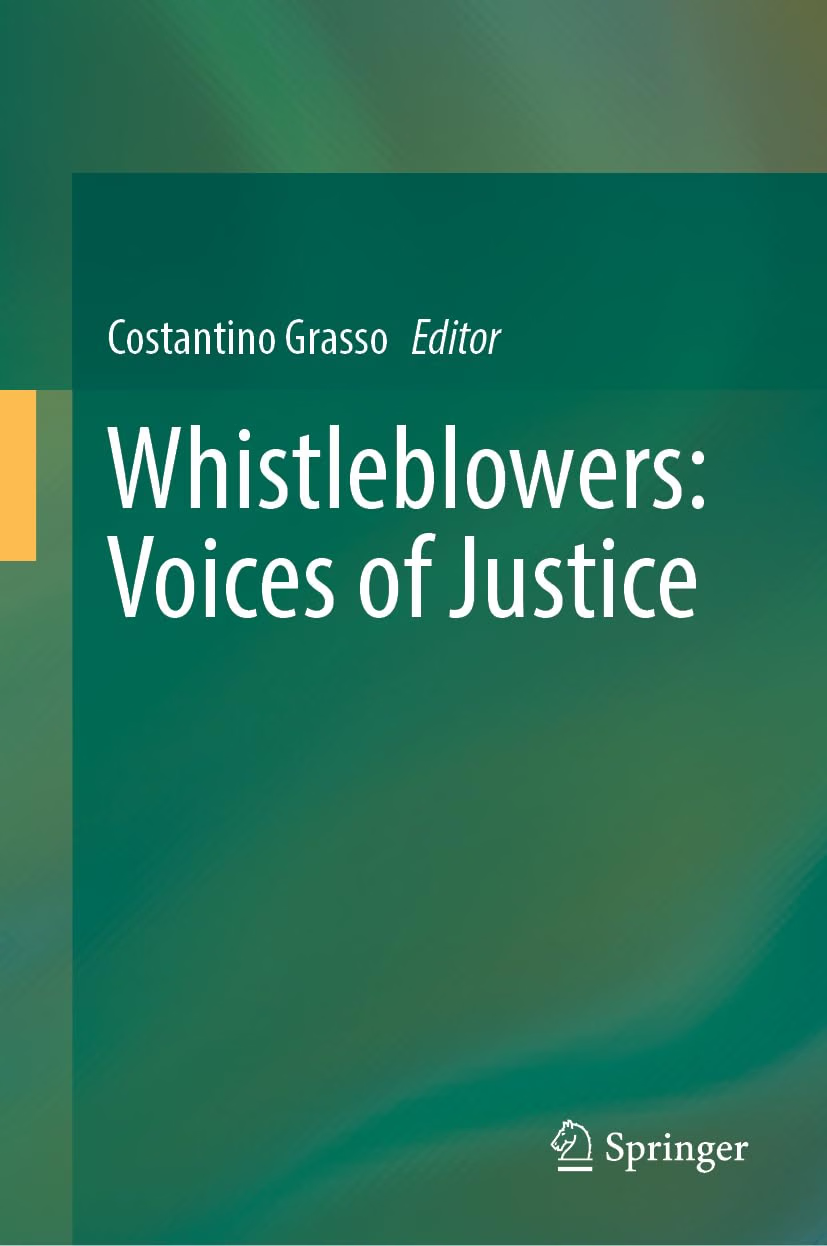
Whistleblowers: Voices of Justice
This title will be released on November 8, 2026.
Whistleblowers: Voices of Justice, edited by legal scholar Costantino Grasso and published by Springer Nature in 2026, brings together contributions from academics, lawyers, investigators and whistleblowers. It examines the role of whistleblowing in revealing corporate crime, corruption, financial misconduct and wrongdoing within public institutions.
The book helps explain why whistleblowing remains comparatively uncommon. Employees who report wrongdoing may face dismissal, professional blacklisting, legal proceedings, financial hardship, damage to family life and prolonged personal stress. They may also believe that regulators will not investigate effectively or that secrecy and confidentiality laws will be used against them rather than against those responsible for the alleged misconduct.
Of particular relevance to offshore finance is John Christensen’s chapter, “Diary of a Traitor: Blowing the Whistle on Tax Haven Jersey.” Christensen, a former economic adviser to Jersey and later co-founder of the Tax Justice Network, describes his efforts to expose what he regarded as an establishment cover-up in the island’s offshore financial sector. His account explains the personal and professional consequences of challenging powerful interests within a small and closely connected jurisdiction.
The book is relevant to BCCI because public understanding of a financial institution often depends on evidence supplied by insiders. However, silence among employees does not necessarily prove that no concerns existed - or that the workforce approved of misconduct. Employees may lack access to the relevant information, fear retaliation, believe that reporting will achieve nothing or remain bound by professional and legal obligations.
The book therefore provides useful context for assessing both whistleblower evidence and the absence of such evidence. It shows why allegations should be tested against documents, firsthand knowledge and corroborating evidence, while recognising the considerable obstacles faced by those who decide to speak publicly.