
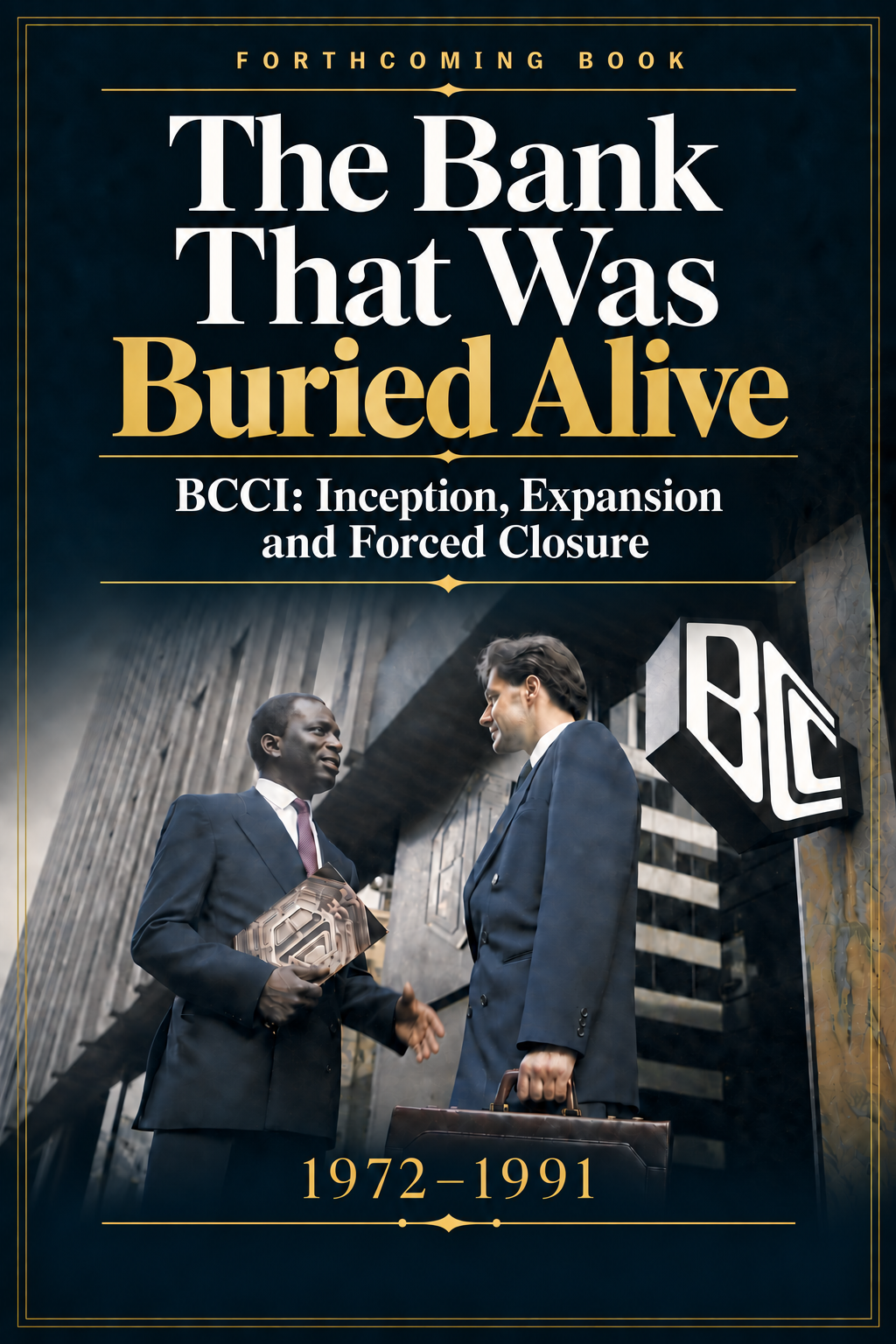
The Bank That Was Buried Alive
BCCI: Inception, Expansion and Forced Closure, 1972–1991
Forthcoming Book
Founded in 1972, the Bank of Credit and Commerce International (BCCI) grew into one of the most geographically extensive banking networks of its time. It operated in 73 countries and employed people of 100 nationalities.
International banking was then concentrated mainly in the established financial centres of the developed world. BCCI set out to act as a bridge between developing and developed countries, bringing international banking services to markets and communities that were often underserved.
Its rapid growth brought both opportunities and challenges. By 1990 - 1991, substantial changes were underway. To address serious problems that had been identified, and with the financial backing of its Abu Dhabi majority shareholders, BCCI was pursuing a major restructuring programme. The programme involved new capital, changes in management, moving its central operations to Abu Dhabi, and separating viable banking businesses from problem assets. By early June 1991, the programme had been agreed in principle and was, by most accounts, close to implementation.
Meanwhile, in March 1991, the Bank of England had confidentially commissioned Price Waterhouse to report on BCCI under Section 41 of the Banking Act. That inquiry would ultimately decide the bank's fate. This book centres on what Price Waterhouse produced, and on how the Bank of England used a report it received only in draft form.
The allegations that followed the closure were sweeping: false accounting, concealed losses, insolvency, money laundering and, in the phrase that came to define the bank in the public mind, an institution-wide "criminal culture." The Bank That Was Buried Alive sets out what those allegations were. It separates what the record actually established from what was assumed or asserted. It also asks whether BCCI, a foreign-owned bank serving the developing world, was judged by a standard that other major international banks facing comparable difficulties were not.
The book looks closely at the decision that ended BCCI's operations on 5 July 1991. The Section 41 report reached the Bank of England only as a draft, delivered outside business hours on the evening of Saturday 22 June 1991. The Bank of England acted on it within days rather than waiting for the finished report. The book then considers Lord Justice Bingham's later inquiry into that decision, which concluded that the closure was appropriate without setting out the reasoning behind that conclusion. Finally, it asks whether a regulatory verdict reached this quickly, on this basis, received the scrutiny such a consequential decision warranted, given that a shareholder-backed rescue was already in motion.
It also follows what happened afterwards. During the worldwide liquidation, substantial BCCI assets were recovered, including cash, investments and deposits with other banks, which called into question the perception that BCCI had been bankrupt. Creditors and depositors were eventually repaid more than 90%, and in Hong Kong more than 100%. Much of that outcome was owed to sustained parliamentary pressure. In the UK this was led by Keith Vaz, then MP for Leicester East. His questions and interventions helped force the Bingham Inquiry into the Supervision of BCCI by the Bank of England, and for years afterwards he kept pressing for the liquidation to be wound up and against the mounting professional fees that were eroding what remained for creditors.
The book draws on official reports, regulatory and liquidation records, contemporary accounts and the experiences of people associated with the bank. It asks a question that received relatively little attention amid the controversy surrounding BCCI:
Was worldwide closure inevitable, or could the viable banking operations have been preserved through the restructuring already underway?
This is the story of an extraordinary international bank: its ambition, its challenges, its abrupt closure, and what was lost when an institution built over nearly two decades was brought to an end.
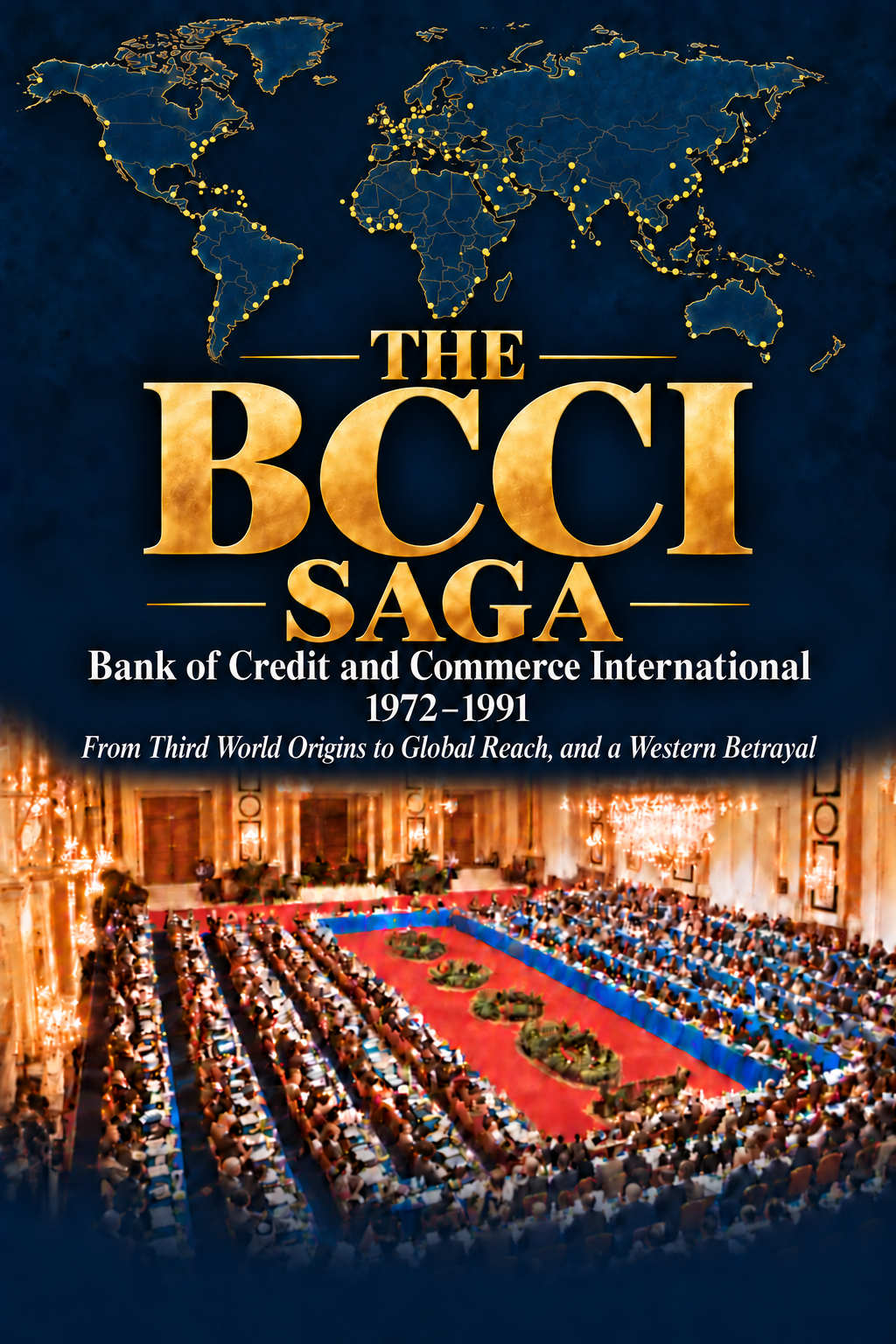 THE BCCI SAGA
Bank of Credit and Commerce International, 1972 - 1991
From Third World Origins to Global Reach, and a Western Betrayal
Forthcoming Book
Today, many people have never heard of the Bank of Credit and Commerce International (BCCI). Those who have usually know only how it ended: abruptly closed in July 1991 and branded a "bank of crooks and criminals."
The BCCI Saga tells the rest of the story.
It begins with the world BCCI was born into: an international banking system shaped by colonial networks, in which developing countries and their communities were often poorly served. Into that world, in 1972, Agha Hasan Abedi founded a new kind of bank. In less than twenty years it grew from Third World origins into a global bank with a presence in 73 countries and employing people of nearly 100 nationalities. Its President, much of its senior management and many of its staff came from developing countries. They brought an approach to banking built on personal trust and long-term relationships, and took it to markets that established Western banks had overlooked.
Drawing on BCCI's own policies, manuals, training materials and records, the book reconstructs how the Bank actually worked: its network, its services and client relationships, its trade finance and its controls. It describes the founder's philosophy of "Real Management," an open, low-hierarchy culture that created the lasting loyalty former staff still call the "BCCI family," and the training that developed a generation of bankers from the Third World. It also follows Abedi's vision beyond banking, in support for developing countries and for programmes in health, welfare and education.
The book does not ignore BCCI's serious failures. False accounting, concealed losses and improper transactions were real wrongdoing. But they are not the same as theft for personal enrichment, and they do not define an institution of thousands of people.
By 1990, a fundamental restructuring had become necessary. Abu Dhabi, by then the 77 per cent majority shareholder, committed substantial financial support to a programme developed with the Bank of England and leading professional advisers. It was designed to protect depositors and employees and to create new, separately regulated banks. In July 1991, before the programme could be implemented, the Bank of England closed BCCI in coordination with some European central banks, and without the participation of Abu Dhabi or the UAE Central Bank. Thousands lost their livelihoods and customers lost access to their accounts. For many connected with the Bank, the closure was a betrayal by the West.
The book ends by asking why the BCCI story has so often been misunderstood, and where the Bank belongs in the history of international banking. It is intended as a permanent documentary reference to an institution that was, for nearly twenty years, far more than its ending.
Companion volumes
The Bank That Was Buried Alive examines the restructuring programme and the forced closure in full.
The Visionary and His Bank presents Agha Hasan Abedi, the bank he founded and his vision beyond banking.
Verdict Deferred revisits the allegations that still shape perceptions of BCCI.
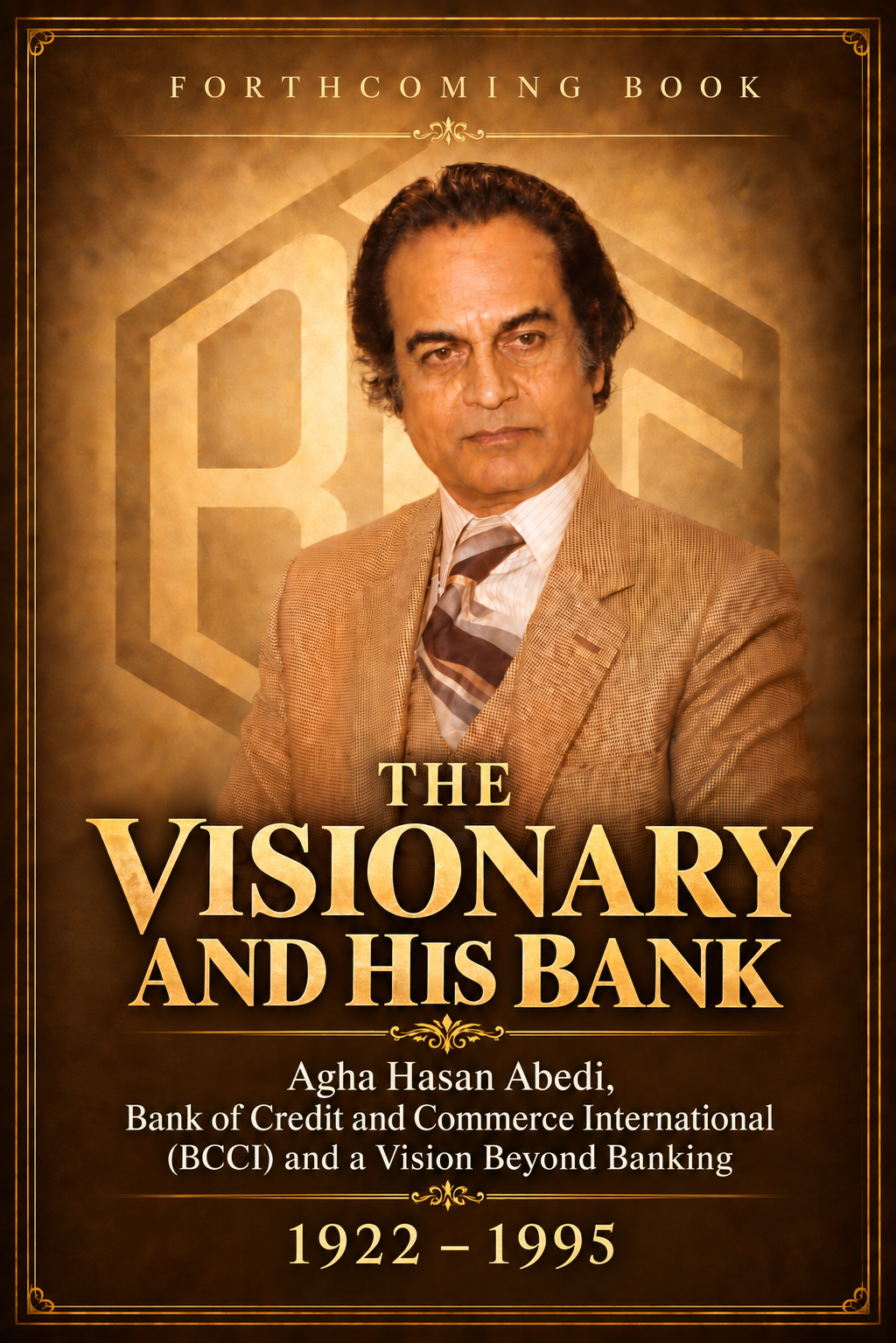
THE VISIONARY AND HIS BANK
Agha Hasan Abedi, Bank of Credit and Commerce International (BCCI) and a Vision Beyond Banking 1922 - 1995
Forthcoming Book
Agha Hasan Abedi was born in Lucknow, India, in 1922. He began his banking career as a trainee officer with Habib Bank before partition of India in 1947 and later moved to Pakistan, where in 1959 he founded United Bank Limited, which grew rapidly into one of the country's leading banks.
In 1972 following the breakup Pakistan and creation of independent Bangladesh he embarked on a far larger ambition: an international bank rooted in the developing world but capable of operating across the global financial system and creating a new class of bankers from the Third World . That bank became the Bank of Credit and Commerce International (BCCI).
The Visionary and His Bank tells the story of Abedi as a banker, institution-builder and thinker, and of the bank with a major purpose through which he put much of his vision into practice.
At the heart of that vision were people. Abedi believed banking could not succeed without trust, personal contact and an understanding of the people involved. His philosophy of "Real Management" replaced rigid hierarchy with openness, direct communication and personal responsibility. BCCI invested heavily in training and developing its staff, and encouraged managers to build lasting relationships with customers rather than treat banking as a series of transactions. Abedi called his employees the "BCCI family." For many, drawn from nearly 100 nationalities, it became a real source of belonging, loyalty and shared purpose.
For Abedi, banking was never an end in itself. He saw the Bank as a means of service to humanity. Through the Third World Foundation and the Third World Prize, he sought to give developing countries a stronger voice. He promoted the idea of a Third World Bank. He also worked alongside former US President Jimmy Carter on the Global 2000 health and development programmes. His relationships reached from Sheikh Zayed bin Sultan Al Nahyan, Ruler of Abu Dhabi, to Lord Callaghan and China's leadership.
The book does not present Abedi as beyond criticism. It does not ignore the serious failures that emerged within BCCI and came to dominate his public reputation. After a heart attack and transplant in 1988 left him partly paralysed, he withdrew from active management. Abu Dhabi, drawing on his long relationship with Sheikh Zayed, then became the majority shareholder and backed a major restructuring. That restructuring was never given the chance to be implemented. In July 1991 the Bank of England suddenly closed BCCI, bringing Abedi's extraordinary achievement to an equally extraordinary end. He died in 1995.
The Visionary and His Bank does not allow BCCI's final years to erase the scale of what Abedi created or the purpose he sought to serve. It is the story of a banker, the bank he built and a vision that extended far beyond banking.
Readers wishing to explore other aspects of BCCI may also turn to The Bank That Was Buried Alive which concentrates on the restructuring and abrupt closure, The BCCI Saga which tells the fuller story of BCCI, and Verdict Deferred which re-examines the allegations against BCCI.
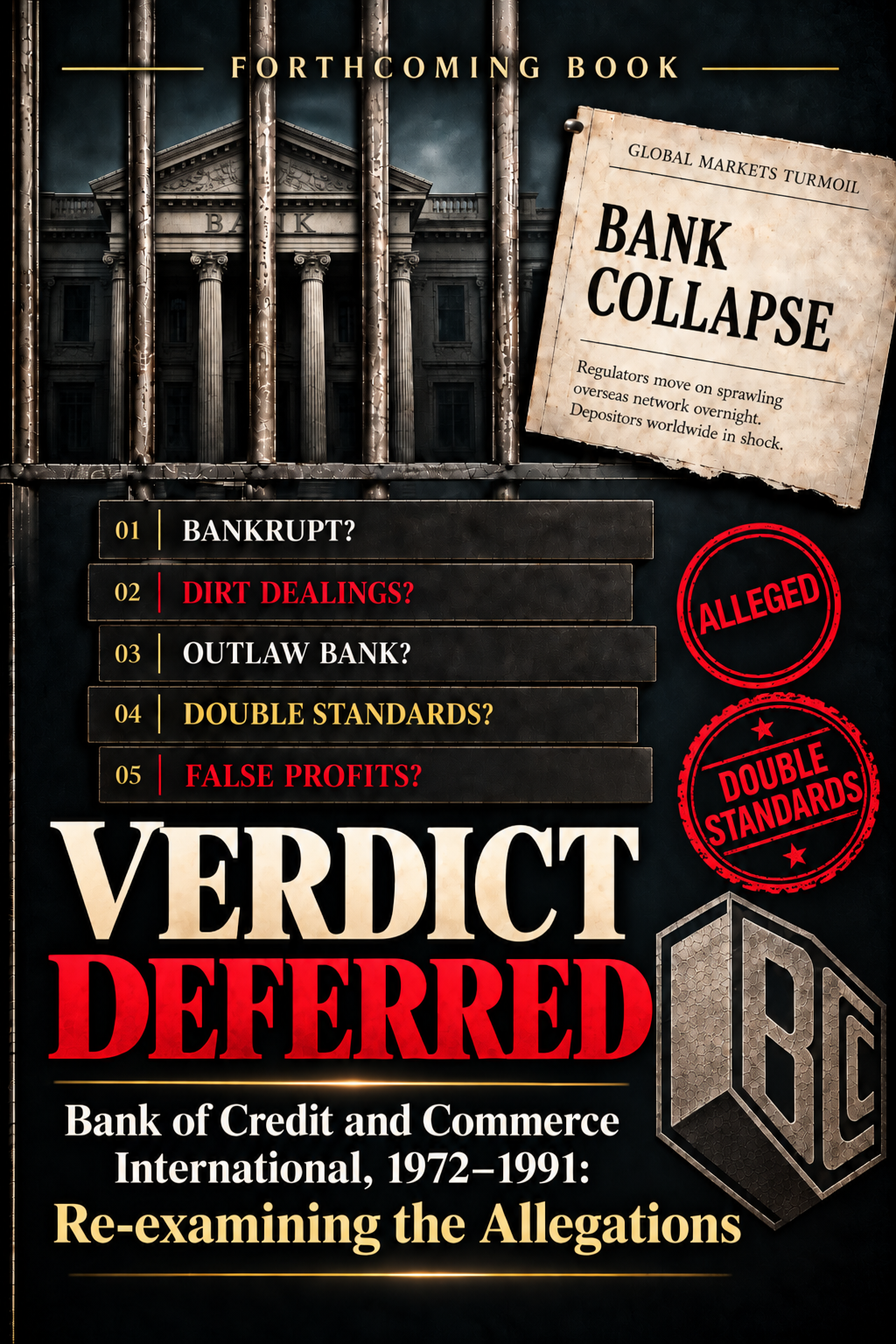
Verdict Deferred
Bank of Credit and Commerce International, 1972 - 1991:
Re-examining the Allegations
Forthcoming Book
When the Bank of England in the United Kingdom led the abrupt closure of the Bank of Credit and Commerce International (BCCI) in July 1991, the verdict came within days. BCCI was "bankrupt." It had "collapsed." It was "the biggest bank fraud in history," an institution with a "criminal culture."
These words were repeated by politicians, regulators, journalists and later authors until they became the accepted story. Yet BCCI did not collapse. It was shut down by regulators while still operating, and it had not defaulted on its obligations. Its liquidation eventually repaid creditors and depositors more than 90 per cent of what they were owed. A single sweeping verdict was passed on a bank with a presence in 73 countries, some 12,000 employees and over a million customers.
Verdict Deferred asks why such a far-reaching verdict was reached so quickly, when the report at the centre of the closure was still only a draft.
The book does not argue that no wrongdoing occurred. BCCI had serious problem loans, Treasury losses, concealed liabilities, false accounting and failures of control, and those responsible should have been investigated and, where the evidence justified it, prosecuted. The question is whether that evidence justified condemning the entire Bank, and thousands of employees who played no part in any wrongdoing.
The book re-examines the key allegations: money laundering, false accounting, concealed losses, the so-called "Black Network," terrorist financing, secret control of US banks, and links to political figures and intelligence agencies. It separates what was established from what was only alleged, and what concerned a particular senior executive from what was later applied to the Bank worldwide. It also asks whether misconduct was for personal gain or, however improperly, to conceal losses, preserve the Bank and fund its expansion. And it asks whether similar conduct at other major international banks was judged by the same standard.
It then turns to the closure itself. The losses and weaknesses were already known and being addressed through a restructuring backed by Abu Dhabi and developed with the Bank of England and professional advisors appointed by Abu and BCCI's auditors, Price Waterhouse. Why, then, did the Bank of England act on an unfinished Section 41 report, when a Price Waterhouse partner considered there was "not very much new" in it? And what part, if any, did communications with US regulators and prosecutors play in the final days of June 1991? The book looks at both questions.
The book also questions the word "bankrupt" itself. Banks, then as now, do not hold typically enough cash to repay every depositor at once. They routinely cover shortfalls by borrowing from other banks in the interbank market and, when needed, from the central bank. By the standard applied to BCCI, many banks could at some point have been called bankrupt. The difference is whether they are given the time and support to recover.
That also raises the question of a double standard. Other major international banks, before and since 1991, faced serious losses, and some faced misconduct, yet they were given forbearance, rescue and time to restructure. BCCI, a foreign-owned bank serving the developing world, was not given that time, even though its own majority shareholders were providing the support.
Verdict Deferred asks why the verdict was not deferred long enough for the report to be completed, its findings tested and Abu Dhabi given the chance to respond before an irreversible decision was taken.
It sits alongside The Bank That Was Buried Alive , which concentrates on the restructuring and abrupt closure, The BCCI Saga and The Visionary and His Bank which presents Agha Hasan Abedi, the bank he founded and his wider vision.
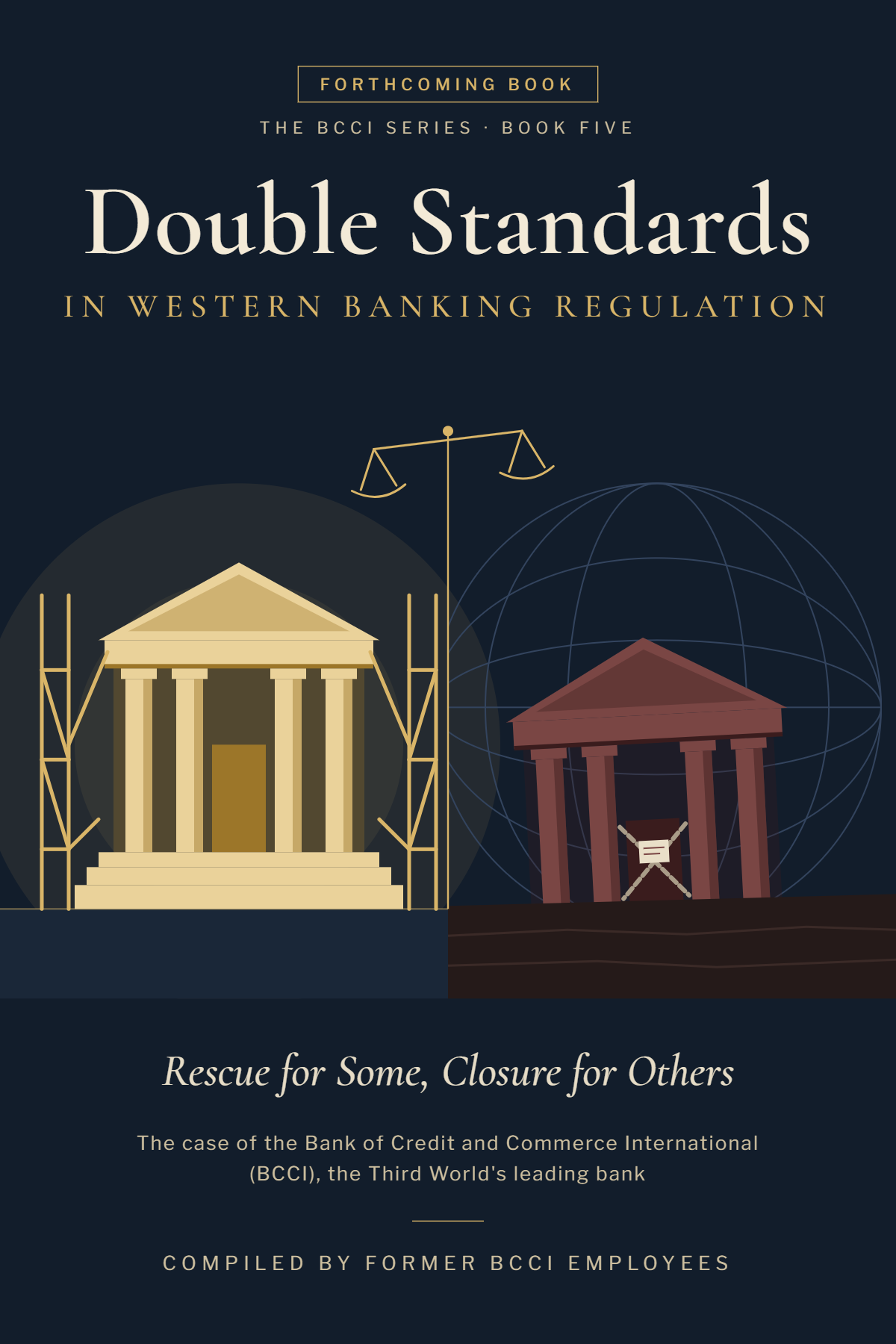
Double Standards in Western Banking Regulation
Rescue for Some, Closure for Others
The case of the Bank of Credit and Commerce International (BCCI), the Third World’s leading bank
In July 1991, regulators led by the Bank of England shut down the Bank of Credit and Commerce International (BCCI), the Third World’s leading bank. They did so even though a restructuring backed by its Abu Dhabi ealthy shareholders had already been agreed in principle. In the decades since, major Western banks have been found involved in money laundering, LIBOR fixing, foreign exchange manipulation and the subprime mortgage scandal, on a scale far larger than anything found against BCCI. Yet they were not branded as fraudulent institutions or shut down. Instead, they were rescued, restructured, or allowed to pay fines and carry on banking.
This book sets BCCI beside these cases, from Johnson Matthey Bankers and Continental Illinois to the 2008 bailouts and later settlements. It asks one question: why was BCCI treated so differently? The evidence is laid out side by side, and readers are left to draw their own conclusions.