
These books examine the dramatic near-collapses and scandals of prominent European and British banking institutions. They highlight a recurring regulatory double standard, where governments and central authorities deployed emergency bailouts, altered rules, and used public funds to rescue failing Western banks rather than forcing their closure.

The Johnson Matthey Affair
Examined in The Politics of Banking by Michael Moran (1986)
Political scientist Michael Moran provides a critical account of the 1984 collapse and subsequent rescue of Johnson Matthey Bankers (JMB) in The Politics of Banking. JMB, a prominent gold-trading and commercial banking institution in the City of London, collapsed from within overnight due to a complete failure of internal risk controls and massive, hidden loans made to high-risk commercial borrowers. Moran documents how these reckless loans quickly became completely unrecoverable, wiping out the bank’s capital base.
Instead of allowing the bank to fail or enforcing an immediate shutdown, the Bank of England executed an unprecedented overnight rescue operation. Fearing that a public bankruptcy would cause panic and permanently damage London’s global gold markets, the central bank stepped in and purchased JMB itself for the symbolic sum of £1. Moran exposes the intense political manoeuvring behind the scenes, revealing how the central bank used public funds and coordinated a private safety net with major High Street banks to absorb the losses, quietly winding down the bad debts while keeping the core business fully operational.
Comparison with BCCI: The Ultimate Reorganisation Double Standard
The Johnson Matthey rescue serves as the absolute historical blueprint for the regulatory double standards applied by Western authorities when handling non-Western institutions.
- Reckless Gambling vs. Legitimate Local Banking: Moran proves that JMB was brought to ruin by hidden, speculative central lending practices designed to bypass basic banking prudence. In sharp contrast, BCCI was founded by Agha Hasan Abedi out of a genuine desire to serve and support developing countries that were historically ignored by colonial-era Western banks. BCCI's local operations across the world were standard retail banks providing vital trade finance to ordinary businesses in the Global South, and there is no evidence it was established as a criminal organisation.
- The Reorganisation Double Standard: The technical steps the Bank of England used to save JMB - taking direct control of the bank, splitting the viable banking business from the bad commercial loans, and injecting capital - were identical to the exact mechanisms proposed in BCCI's Abu Dhabi-backed restructuring plan in 1990-1991. Yet, while the central bank willingly deployed this reorganisation toolkit to keep JMB open, it completely rejected the fully funded, financially backed rescue plan offered by BCCI's majority shareholders. Regulators deliberately chose a sudden, forced shutdown for the non-Western institution while preserving the domestic insider.
- The Sanitising of Information: The final link exposes a profound inequality in legal accountability. To protect the reputations of the British financial establishment, the UK government and the Bank of England completely refused to launch an independent high court or public investigation into the JMB scandal, keeping the boardroom details entirely quiet. However, when BCCI faced central accounting difficulties, a strict centre-branch divide was entirely cast aside. Western regulators aggressively weaponised the central bookkeeping issues - which were completely separate from the honest, day-to-day work of the local branches - to launch highly public inquiries, execute a sudden global shutdown, and permanently liquidate the bank.

Shredded: Inside RBS, The Bank That Broke Britain (2014)
Shredded: Inside RBS, The Bank That Broke Britain, by journalist Ian Fraser, delivers a highly critical and deeply damning investigation into the Royal Bank of Scotland (RBS), exposing how it acted as an aggressive, destructive force that brought the British financial system close to collapse. While other accounts focus only on the boardroom arrogance of CEO Fred Goodwin, Fraser goes much deeper. He reveals how widespread malpractice was intentionally engineered into the bank's daily operations, most notably through its notorious Global Restructuring Group (GRG).
The book details a shocking corporate scandal: RBS aggressively targeted its own small-to-medium business customers who were facing minor financial hurdles. Instead of helping these struggling companies get back on track, the bank deliberately pushed them into artificial distress. RBS hit them with manufactured fees, altered their loan terms without warning, and systematically took over their valuable assets and properties. GRG acted as an internal demolition squad, forcing viable British businesses into bankruptcy so the bank could seize their properties on the cheap. This practice of seizing company properties was used to patch up RBS’s own high-risk, debt-ridden balance sheets and maximise corporate revenues - all while the executives who designed this scheme walked away with massive personal bonuses.
Comparison with BCCI: The Protection of Industrial-Scale Deception
Shredded exposes the raw hypocrisy of global financial regulation, illustrating how a major Western bank can systematically destroy thousands of legitimate businesses without ever facing forced closure or criminal prosecution.
- Systemic Destruction vs. Standard Retail Work: Fraser proves that RBS operated a state-sanctioned racket that deliberately wiped out thousands of honest small businesses across the United Kingdom. In sharp contrast, BCCI’s global branch network spent decades conducting completely standard, lawful commercial banking and vital trade finance that actively supported businesses in developing economies. Yet, because RBS was a powerful, mainstream institution of the Western establishment, its industrial-scale deception was treated by regulators as a mere administrative misstep rather than corporate crime.
- The Reorganisation Double Standard: When RBS collapsed under the weight of its own greed and high-risk debt in 2008, the British government did not move to shut it down. Instead, ministers and central authorities deployed the largest taxpayer-funded bailout in history, altered regulatory rules, and actively kept the bank open. Conversely, when BCCI ran into financial difficulties, Western regulators completely rejected a fully funded, financially backed restructuring plan. This plan was specifically designed to reorganise the bank, recapitalise its operations, and protect its millions of commercial depositors. Regulators deliberately chose liquidation over rescue.
- The Punishment Double Standard: The ultimate link between the two cases highlights a profound institutional inequality. At RBS, despite clear evidence of deceptive practices that ruined lives and devastated the UK economy, the bank was allowed to continue operating. Not a single senior executive went to prison; instead, they were permitted to keep their massive fortunes and pensions. However, when BCCI faced central accounting difficulties, Western authorities instantly weaponised these entries to claim the bank was entirely beyond rescue. They completely dismantled the global institution and shut it down, proving that the ultimate fate of a bank depends entirely on its geographic origin and institutional privilege.
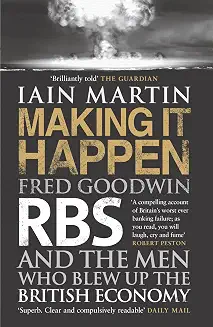
Making It Happen: Fred Goodwin, RBS, and the Men Who Blew Up the British Economy (2013)
Making It Happen: Fred Goodwin, RBS, and the Men Who Blew Up the British Economy (2013), by Iain Martin records the rapid rise and spectacular collapse of the Royal Bank of Scotland (RBS) under its Chief Executive, Fred Goodwin. The book details how a corporate culture driven by extreme executive arrogance, aggressive corporate takeovers, and a total disregard for internal risk managers pushed RBS to briefly become the world's largest banking institution. Martin shows how the bank’s board of directors and government financial regulators completely failed to see the danger. They stood by idly while Goodwin loaded the bank's balance sheet with highly leveraged, high-risk assets. This reckless strategy culminated in the disastrous acquisition of the Dutch bank ABN Amro, a move that completely broke the bank and forced the largest taxpayer-funded bailout in British history.
Comparison with BCCI: The Protection of Management and Reorganisation
Making It Happen illustrates how the legal and regulatory systems completely protect the highest levels of the Western banking establishment, even after they have masterminded a multi-billion-pound financial disaster.
- Legitimate Banking Operations vs. Extreme Aggression: Martin proves that RBS was brought to ruin by reckless central executive decisions, boardroom overconfidence, and a race to build a massive global empire through debt-fuelled takeovers. In sharp contrast, BCCI was founded by Agha Hasan Abedi out of a genuine desire to serve and empower developing countries that were historically ignored by Western colonial banks. BCCI's local operations were standard retail banks providing vital trade finance to businesses in the Global South, and there is no evidence it was established as a criminal organisation.
- The Reorganisation Double Standard: When RBS collapsed under the weight of its central executive failures and high-risk debt in 2008, the bank itself was never shut down. Instead, the British government and central authorities deployed massive public funds to protect its worldwide branch network, rewrite regulatory rules, and keep the institution open. Conversely, when BCCI ran into financial difficulties, Western regulators completely rejected a fully funded, financially backed restructuring plan. This reorganisation framework was specifically designed to recapitalise the bank and protect its millions of commercial depositors, yet authorities deliberately chose forced liquidation over rescue.
- The Punishment Double Standard: The ultimate link between the two cases highlights a profound institutional inequality in global regulation. At RBS, despite explicit evidence of deceptive corporate practices that devastated the British economy, Fred Goodwin and his senior team avoided any form of criminal prosecution or imprisonment. They were permitted to retire with their massive personal fortunes and pensions intact. However, when BCCI faced central accounting difficulties, a strict centre-branch divide was completely ignored by regulators. Instead of treating the central bookkeeping issues as separate from the honest, day-to-day work of the branches, Western authorities instantly weaponised the core failures to execute a sudden, forced shutdown that destroyed the entire global bank and sent its central officers to prison.
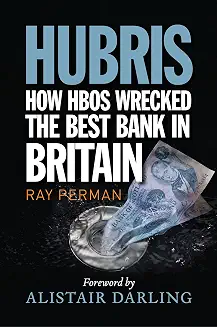
Hubris: How HBOS Wrecked the Best Bank in Britain (2012)
Hubris: How HBOS Wrecked the Best Bank in Britain (2012), by Ray Perman records the history and spectacular crash of HBOS, a massive banking conglomerate formed by the merger of Halifax and the historic Bank of Scotland. Based on internal documents and interviews, the book traces how the bank's leaders threw out centuries of sound banking principles to chase aggressive market share and corporate profits at all costs. Perman shows how senior executives created a reckless culture that pumped billions of pounds into high-risk corporate ventures, speculative commercial property, and low-quality loans. When the global banking crisis hit and banks stopped lending to one another, the bank completely ran out of money and faced a devastating £10 billion loss, leading to a government-brokered rescue acquisition by Lloyds Banking Group.
Comparison with BCCI: The Preservation of Insiders and the Reorganisation Double Standard
Hubris provides a clear case study of how massive structural failures in mainstream Western institutions are deliberately managed by authorities to ensure corporate continuity and keep the businesses open.
- Legitimate Local Support vs. Corporate Aggression: Perman proves that HBOS was destroyed by central corporate greed, reckless executive lending strategies, and high-risk speculative property bets made at the core. In sharp contrast, BCCI was founded by Agha Hasan Abedi out of a genuine desire to support developing countries that were historically ignored by colonial-era Western banks. BCCI's local operations were standard retail banks providing vital trade finance to ordinary businesses in the Global South, and there is no evidence it was established as a criminal organisation.
- The Reorganisation Double Standard: When HBOS collapsed due to its central management failures, the UK government worked behind the scenes to actively preserve the bank. Ministers waived competition laws, arranged a soft rescue merger, and deployed massive taxpayer capital to absorb the bank's high-risk debts and protect its branch network. Conversely, when BCCI ran into central financial difficulties, Western regulators completely rejected a fully funded, financially backed restructuring plan. This reorganisation framework was specifically designed to recapitalise the bank and protect its millions of commercial depositors, yet authorities deliberately chose a forced shutdown over an orderly rescue.
- The Punishment Double Standard: The ultimate link between the two cases highlights a profound institutional inequality in global regulation. At HBOS, despite clear evidence of deceptive lending practices that wrecked a historic institution and cost taxpayers billions, the bank's operations were protected and kept open. Its top executives avoided criminal prosecution or prison, retaining their personal fortunes. However, when BCCI faced central accounting difficulties, a strict centre-branch divide was completely ignored by regulators. Instead of treating the central bookkeeping issues as separate from the honest, day-to-day work of the local branches, Western authorities instantly weaponised the core failures to execute a sudden, forced shutdown that destroyed the entire global bank and sent its central officers to prison.
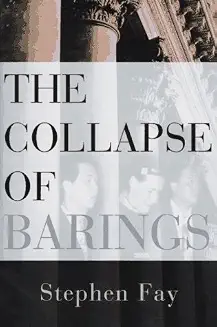
Collapse of Barings (1991)
The Collapse of Barings by Stephen Fay provides a thorough investigative account of how Britain's oldest and most prestigious merchant bank went bankrupt overnight due to completely unchecked financial gambling. The book focuses on Nick Leeson, a 28-year-old trader based in Singapore who lost Barings over £800 million through unauthorised financial speculation. Fay details the frantic weekend in February 1995 when the Bank of England desperately tried to organise a private rescue and find a suitable buyer to save Barings from collapse, before the business was ultimately sold to the Dutch global banking group, ING, for a symbolic £1. Far from a simple tale of one isolated individual, Fay exposes a closed network of boardroom incompetence, corporate greed, and a complete lack of internal oversight that allowed the disaster to happen.
Comparison with BCCI: The Reorganisation Double Standard
The Collapse of Barings delivers an exceptional case study in regulatory bias, demonstrating how mainstream Western institutions receive protective state handling even during catastrophic internal failures.
- Legitimate Customer Support vs. Destructive Speculation: Fay proves that Barings was completely broken by unchecked, high-risk financial speculation carried out at the centre of its trading operations. In sharp contrast, BCCI was founded by Agha Hasan Abedi out of a genuine desire to serve and support developing countries that were historically ignored by colonial-era Western banks. BCCI's local operations across the world were standard retail banks providing vital trade finance to ordinary businesses in the Global South, and there is no evidence it was established as a criminal organisation.
- The Reorganisation Double Standard: When Barings faced immediate ruin, the Bank of England did not launch a sudden enforcement shutdown. Instead, central authorities spent an entire weekend actively trying to organise an emergency rescue and private buyout programme to protect the bank's historic name and keep the business running. This protective treatment stands in stark contrast to the handling of BCCI. When BCCI ran into central financial difficulties, Western regulators completely rejected a fully funded, financially backed restructuring plan. This reorganisation framework was specifically designed to recapitalise the bank and protect its millions of commercial depositors, yet authorities intentionally chose a sudden, forced liquidation over an orderly rescue.
-
The Critical Centre-Branch Divide: The ultimate link between the two cases highlights a profound institutional inequality in global regulation. At Barings, despite a total breakdown in internal management, regulators treated the crisis as a localised trading failure, allowing the wider business to be saved and absorbed by ING to protect financial continuity. However, when BCCI faced central accounting difficulties, a strict centre-branch divide was completely ignored by regulators. Instead of treating the central bookkeeping issues as separate from the honest, day-to-day work of the local branches, Western authorities instantly weaponised the core failures to execute a sudden, global shutdown that destroyed the entire bank - proving that the ultimate fate of a bank depends entirely on its geographic origin and institutional privilege.

The Fall of Northern Rock (2008)
The Fall of Northern Rock by Brian Walters, a former commercial lending manager at Northern Rock, provides a firsthand insider account detailing the rapid rise and sudden collapse of the British mortgage bank. The book tracks how a minor, former regional building society ballooned into one of the United Kingdom's largest mortgage lenders by relying on highly risky wholesale money markets for its daily funding. When those global markets froze in 2007, the bank completely imploded, triggering the first visible public run on a British bank in over a century. Walters details how directors chased aggressive growth to maximise short-term corporate profits while remaining completely blind to the bank's deep structural vulnerabilities, ultimately forcing a chaotic government intervention.
Comparison with BCCI: The Protection of Infrastructure and Reorganisation
The Fall of Northern Rock highlights a profound double standard regarding corporate survival and state protection, showing how mainstream Western banks are actively insulated from total destruction.
- Legitimate Retail Support vs. High-Risk Borrowing: Walters proves that Northern Rock was brought to ruin by reckless central executive strategies that relied on borrowing short-term money from international markets rather than standard customer deposits. In sharp contrast, BCCI was founded by Agha Hasan Abedi out of a genuine desire to serve and support developing countries that were historically ignored by colonial-era Western banks. BCCI's local operations were standard retail banks providing vital trade finance to ordinary businesses in the Global South, and there is no evidence it was established as a criminal organisation.
- The Reorganisation Double Standard: When Northern Rock's high-risk business model failed in 2007, the British government and the Bank of England immediately stepped in. They provided emergency cash support and eventually executed a full nationalisation plan to protect the bank's entire branch network and keep its business infrastructure running safely. Conversely, when BCCI ran into financial difficulties, Western regulators completely rejected a fully funded, financially backed restructuring plan. This reorganisation framework was specifically designed to recapitalise the bank and protect its millions of commercial depositors, yet authorities deliberately chose a sudden, forced liquidation over a managed rescue.
- The Punishment Double Standard: The ultimate link between the two cases highlights a profound institutional inequality in global regulation. At Northern Rock, despite clear corporate recklessness that caused mass public panic and cost taxpayers billions, the bank's infrastructure was protected, and not a single executive faced criminal prosecution or prison. However, when BCCI faced central accounting difficulties, a strict centre-branch divide was completely ignored by regulators. Instead of treating the central bookkeeping issues as separate from the honest, day-to-day work of the local branches, Western authorities instantly weaponised the core failures to execute a sudden, global shutdown that destroyed the entire bank-proving that the ultimate fate of an institution depends entirely on its geographic origin and institutional privilege.
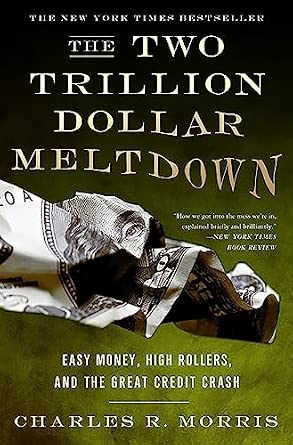
The Two Trillion Dollar Meltdown: Easy Money, High Rollers, and the Great Credit Crash
The Two Trillion Dollar Meltdown: Easy Money, High Rollers, and the Great Credit Crash by Charles R. Morris provides a brilliant and accessible explanation of how the Western financial system engineered the massive credit bubble that led to the 2008 global economic crash. Writing in clear, sharp prose, Morris demystifies the complex financial games, policy misjudgments, and deep delusions that put the world economy on the brink of ruin. He traces how the stable, high-performance economy of the 1980s and 1990s quickly tilted into gross boardroom excess.
The book details how major Western banks, along with their hedge fund and private equity clients, took on astronomical levels of debt-driven leverage to maximise short-term corporate profits. Morris exposes a quarter-century of free-market zealotry that actively encouraged abusive lending, high-risk financial engineering, and extreme institutional secrecy. He reveals a culture of systematic concealment, showing how financial and government leaders intentionally downplayed and hid the mounting distress signals in the housing and credit markets until the entire global system faced a fierce, unavoidable recession.
Comparison with BCCI: The Failure of Free-Market Zealotry and Corporate Protection
The Two Trillion Dollar Meltdown highlights the deep systemic hypocrisy of Western financial oversight, where industrial-scale market deception and hidden risks are protected at the core while non-Western institutions are destroyed.
- Legitimate Support vs. Destructive Speculation: Morris proves that Western financial giants built a multi-trillion-pound empire based entirely on high-risk, abusive lending practices and hidden accounting games designed to deceive the public. In sharp contrast, BCCI was founded by Agha Hasan Abedi out of a genuine desire to serve and support developing countries that were historically ignored by colonial-era Western banks. BCCI's local operations were standard retail banks providing vital trade finance to ordinary businesses in the Global South, and there is no evidence it was established as a criminal organisation.
- The Reorganisation Double Standard: Morris documents how Western financial leaders resorted to continued denial and concealment to hide their massive losses from the public. Yet, when these multi-trillion-pound balance sheet failures finally came to light, the state did not move to shut these banks down. Instead, Western governments and central authorities stepped in to manage a massive restructuring process, rewriting regulatory rules and deploying public funds to keep the institutions open. Conversely, when BCCI ran into financial difficulties, Western regulators completely rejected a fully funded, financially backed restructuring plan. This reorganisation framework was specifically designed to recapitalise the bank and protect its millions of commercial depositors, choosing a forced, destructive shutdown over a managed rescue.
- The Critical Centre-Branch Divide: The ultimate link between the two cases exposes a profound institutional inequality in global regulation. The major Western banks analyzed by Morris used extreme central secrecy to load their books with high-risk, debt-ridden assets that endangered the entire global economy. However, because these institutions were mainstream pillars of the Western establishment, they were deemed too critical to close, and their executives avoided criminal accountability. When BCCI faced central accounting difficulties, a strict centre-branch divide was completely ignored by regulators. Instead of treating the central bookkeeping issues as separate from the honest, day-to-day work of the local branches, Western authorities instantly weaponised the core failures to execute a sudden, forced shutdown that destroyed the entire global bank—proving that the ultimate fate of an institution depends entirely on its geographic origin and institutional privilege.

A Colossal Failure of Common Sense: The Inside Story of Lehman Brothers (2009)
A Colossal Failure of Common Sense: The Inside Story of Lehman Brothers by Lawrence G. McDonald, a former vice president at Lehman Brothers, delivers a brilliant inside look at the dramatic rise and sudden downfall of the historic Wall Street investment bank. Written in clear, fast-paced prose, the book exposes how a small group of top executives in New York threw out over a century of sound banking traditions to chase massive corporate profits. McDonald shows how the firm's leadership became completely obsessed with high-risk real estate bets and debt-driven expansion.
The book details how Lehman's chief executive, Dick Fuld, surrounded himself with weak advisers and intentionally ignored his own internal risk managers who warned him of a housing market crash. Leadership loaded the bank's balance sheet with billions of dollars in high-risk, debt-ridden assets, hiding the true danger from investors using deceptive accounting tricks. When global money markets froze in September 2008, the bank completely ran out of cash. Finding no emergency buyer, Lehman was forced into the largest bankruptcy in world history, a catastrophic collapse that sent shockwaves through the global economy and triggered a fierce international recession.
Comparison with BCCI: The Exception That Provoked Blank Protection
A Colossal Failure of Common Sense serves as the vital historical baseline for your entire comparative argument, acting as the definitive exception that proves the rule regarding state intervention and institutional survival.
-
The Trigger for Saving Western Banks: Lehman Brothers is highly important to include because its chaotic collapse was the exact event that terrified Western central banks and governments. The raw destruction caused by letting Lehman disintegrate overnight created such intense public panic that Western authorities immediately resolved never to let another mainstream bank fail. Lehman’s liquidation was the specific trigger that led to the blanket "too big to fail" policy, ensuring that every subsequent failing Western bank-such as RBS or HBOS-was protected, bailed out, and kept open at all costs.
- The Critical Centre-Branch Divide: McDonald proves that Lehman Brothers was brought to ruin by reckless central boardroom decisions and hidden bookkeeping games played at the core of the firm in New York. Yet, when the collapse happened, the strict centre-branch divide was completely ignored, and the entire worldwide infrastructure was allowed to disintegrate. This matches the treatment of BCCI. When BCCI faced central accounting difficulties, a strict centre-branch divide was similarly cast aside by regulators. Instead of treating the central bookkeeping issues as separate from the honest, day-to-day work of the local branches, Western authorities instantly weaponised the core failures to execute a sudden, global shutdown that destroyed the entire bank.
- The Reorganisation Double Standard: The starkest contrast lies in how viable restructuring options were handled. While Lehman was left to collapse because regulators initially miscalculated the danger, BCCI possessed highly viable global operations and a fully funded, financially backed restructuring plan to continue its operations. Despite having a solid framework to reorganise, recapitalise, and protect its millions of ordinary commercial depositors, Western regulators deliberately rejected this path for the non-Western institution, proving that the ultimate fate of an institution depends entirely on its geographic origin and institutional privilege.